〜
The Kyoto Trail, Walked in Reverse — Mountains and Streets in Rain and Fog, from Kamikatsura to Fushimi-Momoyama
Hiking the Kyoto Trail clockwise in 3 days (about 80 km): Kurama and Mount Hiei in fog, the village of Ohara, Fushimi Inari in the rain, and why to finish in Fushimi.
At the end of my summer break, I wanted to do something. Since a trip to Thailand in July, almost two months had passed without that feeling of really enjoying a journey. I decided to go just two days before leaving. I chose Kyoto because a visit in June had left such strong memories, and because it’s easy and cheap to reach from Tokyo. The Kyoto Trail looked walkable — and above all, I love Kyoto.
The Kyoto Trail (京都一周トレイル) is a long-distance walking route that circles the city of Kyoto through the mountains around it, linking temples, shrines, villages and city streets.
To be honest, I was underprepared. I hardly researched the temples along the way and didn’t buy the official trail map, so there were many moments when a map app alone wasn’t enough to find the way. Even so, it turned into a trip only Kyoto could offer: mountains and city, both at once.
The trip at a glance
| Day | Route | Distance / ascent | Highlights | Things to know |
|---|---|---|---|---|
| Day 1 | Kamikatsura Station → Koke-dera → Arashiyama → Kiyotaki → Takao → near Kurama → Ninose Station | 30.1 km / 1,642 m up | Arashiyama viewpoint, the river path at Kiyotaki, Sawa-no-ike pond | A long day. Few places to eat |
| Day 2 | Ninose → Kurama-dera → Yakuō-zaka pass → Shizuhara → Ohara → Mount Hiei (Cable Hiei Station) | 20.7 km / approx. 1,370 m up | Kurama-dera in the fog, the village of Ohara, Mount Hiei in the rain | A climb of about 600 m from Ohara to Mount Hiei. The descent near the top is slippery |
| Day 3 | Ginkaku-ji (Philosopher’s Path) → Mt. Daimonji → Higashiyama summit park → Mt. Kiyomizu → Fushimi Inari → Mt. Ōiwa → Fushimi-Momoyama Station | 29.5 km / 1,306 m up | Mt. Daimonji, Fushimi Inari, the town of Fushimi | Steep asphalt slopes and long road walks after Fushimi Inari |
| Day 4 | Sightseeing in Kyoto | — | — | — |
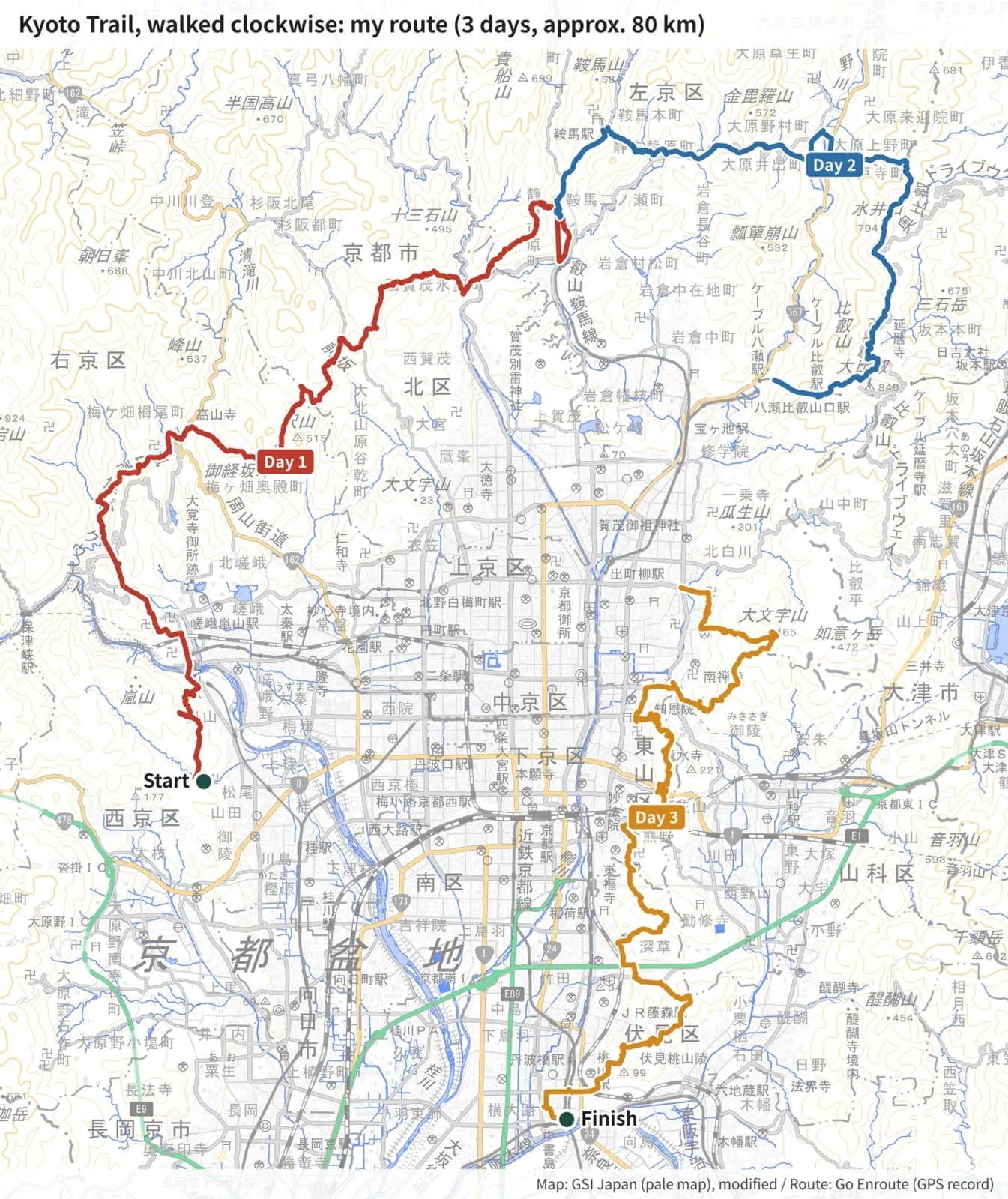
In total I walked about 80 km over three days. I did not walk from Mount Hiei to Ginkaku-ji; I took the cable car and trains instead.
Getting to Kyoto
On the night of 24 September, I took an overnight bus from Shinjuku in Tokyo and arrived at the Hachijō exit of Kyoto Station at 6 the next morning. The official direction of the Kyoto Trail starts at Fushimi-Momoyama in the southeast and runs north via Mount Hiei, Ohara, Kurama and Takao, finishing at Arashiyama in the west. I walked it the other way round, clockwise: starting at Kamikatsura on the Arashiyama side and finishing at Fushimi-Momoyama.
Day 1 — Kamikatsura to Ninose (30.1 km)
I set off from Hankyu Kamikatsura Station at about 7 a.m. The area around the station is a quiet residential neighbourhood, and near an elementary school I sensed a warmth between neighbours that you rarely see in Tokyo. At Koke-dera (Saihō-ji, the famous “moss temple”), visits are limited to those who apply in advance, so I could only admire the gate.
It was my first time on a mountain trail since March. The morning forest was dark and the air cool, and there had been many bear sightings in the area, so honestly I was quite scared. Passing a trail runner eased my nerves a little, but tired from the overnight bus, my heart was racing and I was sleepy at the same time. “Can I really keep this up for three more days?” I was already wondering.
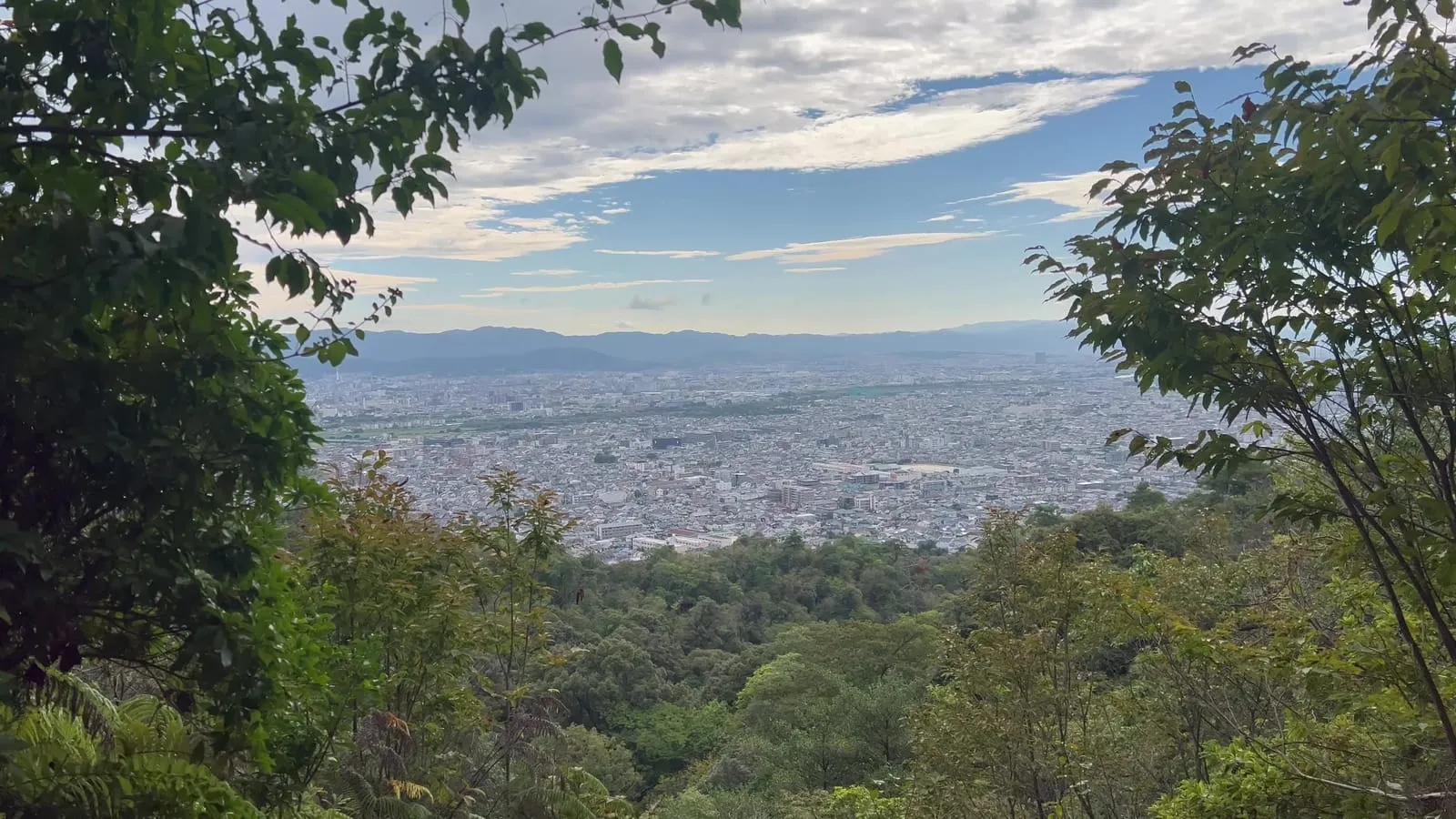
After climbing about 200 m, I could see the whole city of Kyoto spread across its basin. The first stretch of trail was well kept — a perfect warm-up.
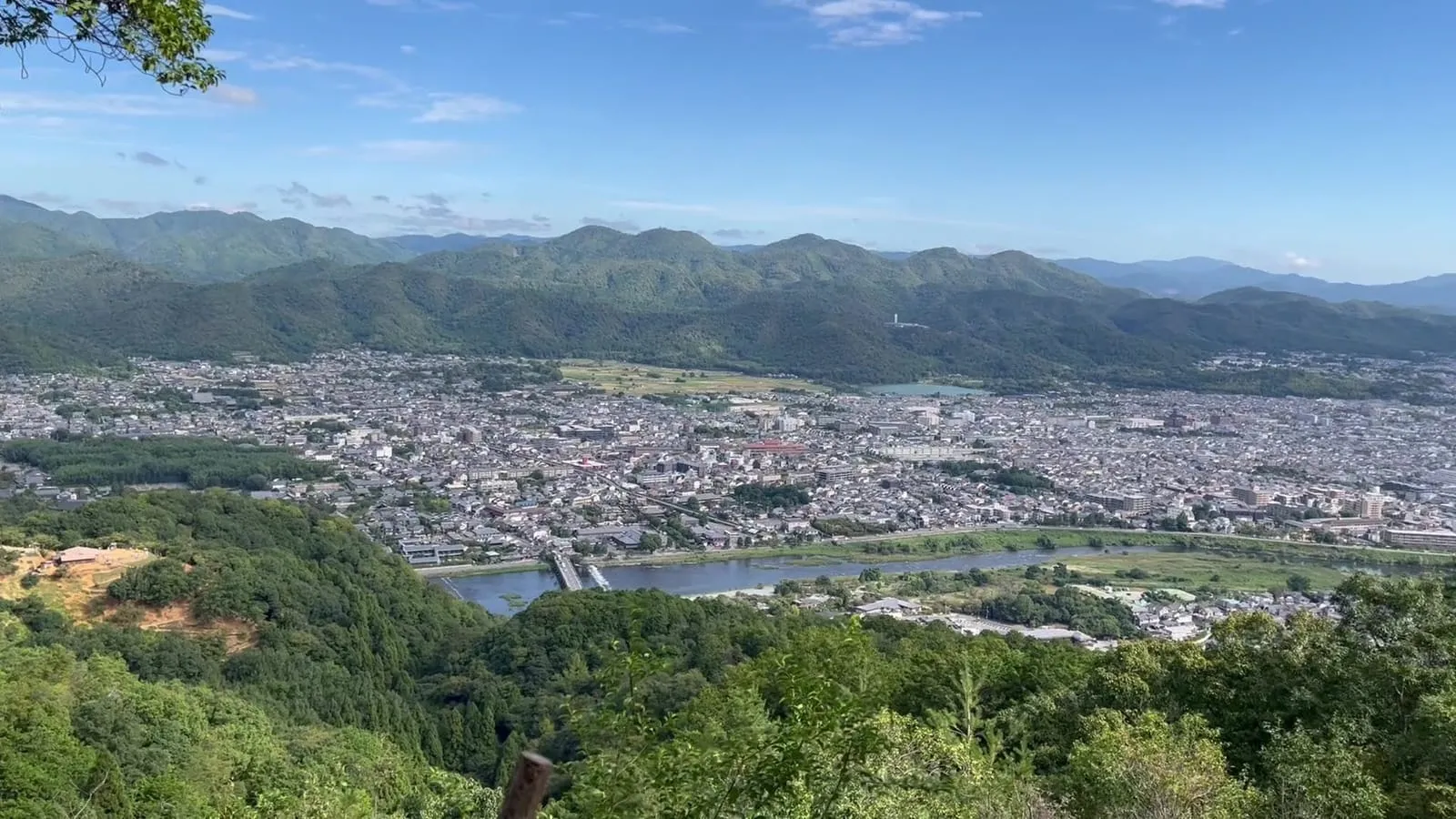
At a viewpoint overlooking Arashiyama, I chatted with someone around sixty. Hearing the lilt of the Kansai dialect, so different from Tokyo, I finally felt it: I’m in Kyoto, I’ve climbed up here. Togetsukyō Bridge looked tiny below. Back down the mountain was the familiar tourist town. Walking through the crowds with a big backpack felt a little embarrassing — and a little proud.
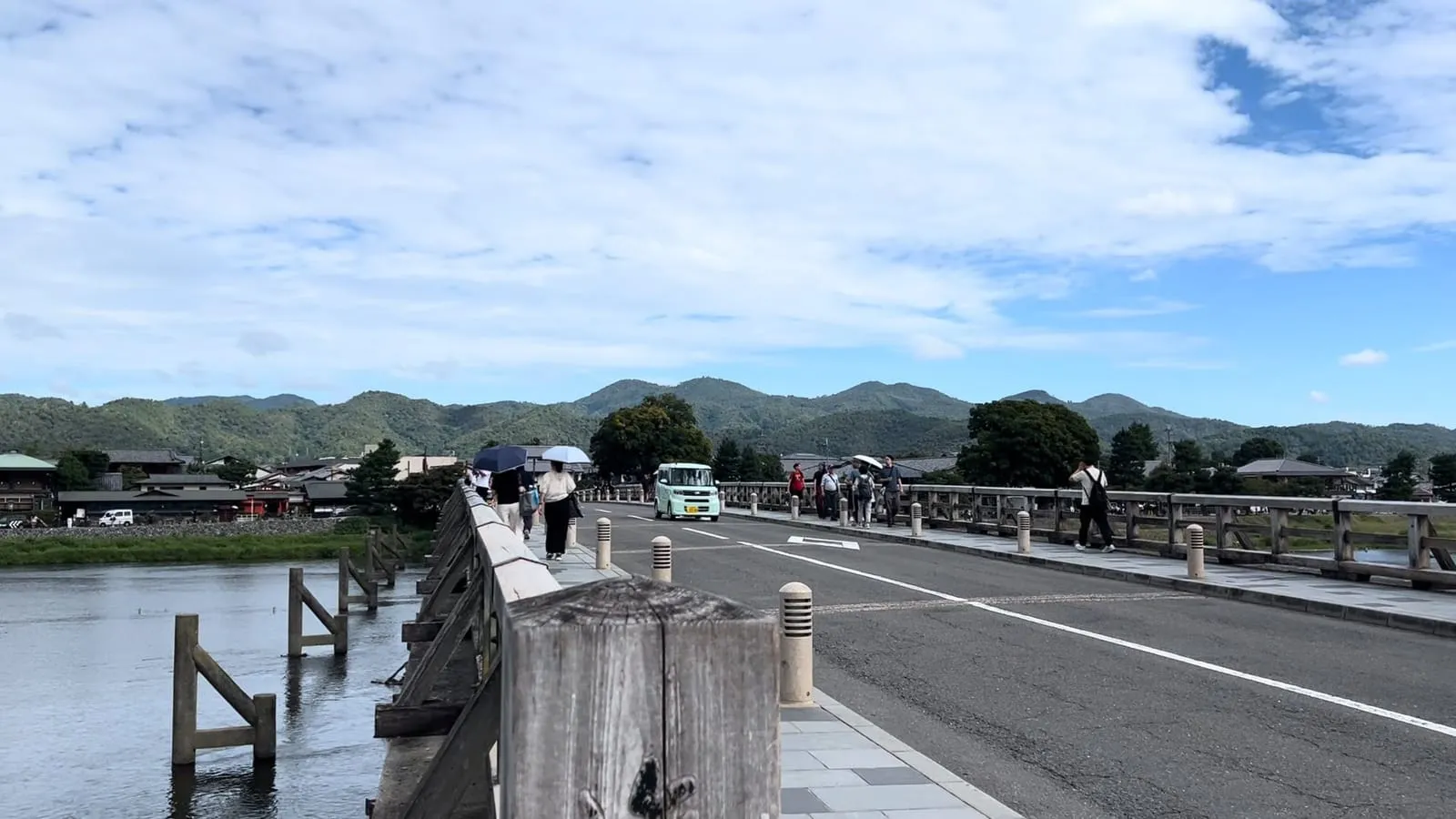
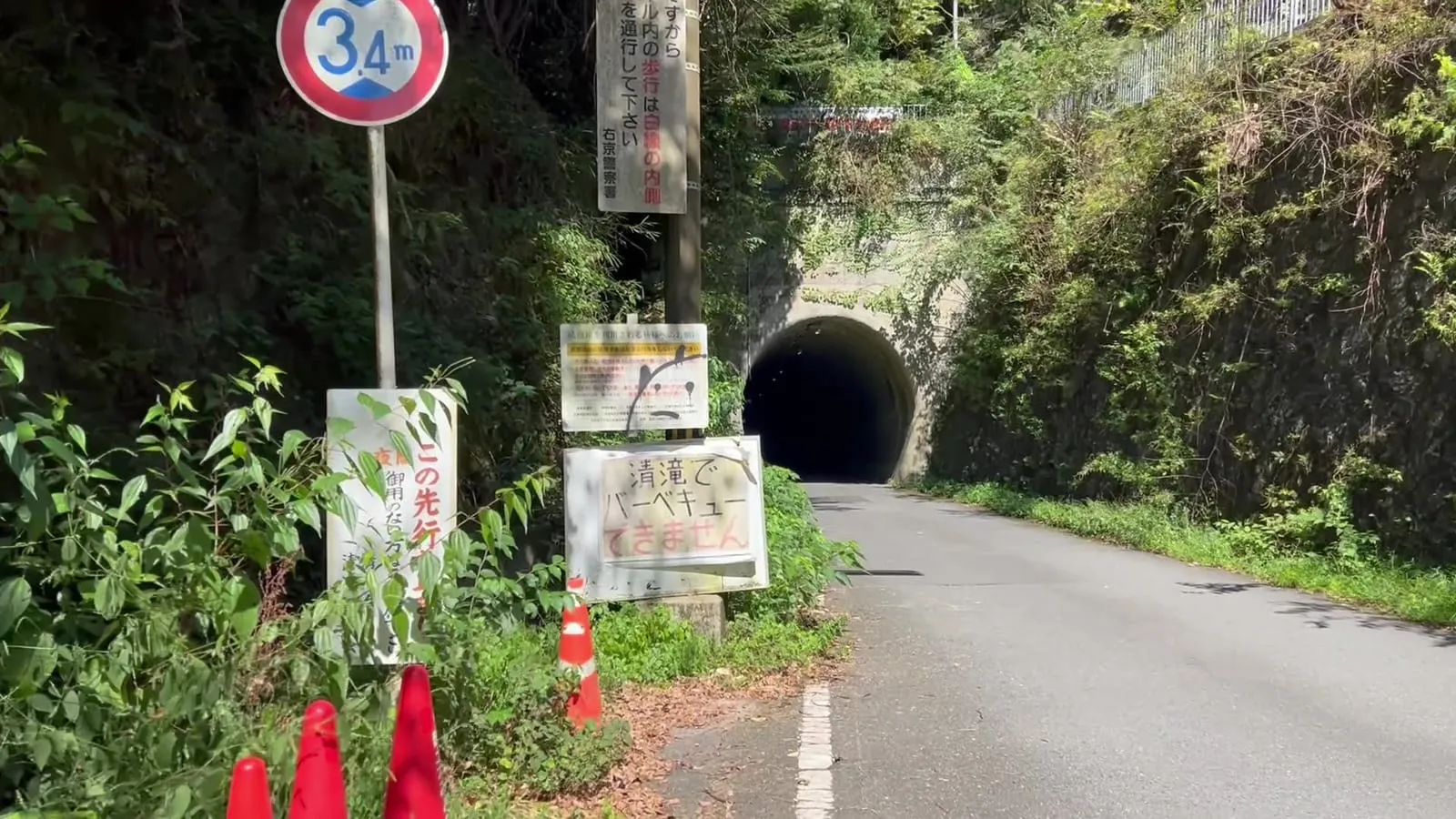
Thirty minutes to an hour past the tourist area, I reached the Kiyotaki Tunnel, about 400 m long. It has fluorescent lights, but it’s dim, with an eerie feeling that you might never get out. A third of the way in, I turned back. There I met a 25-year-old who had recently moved to Kyoto, and asked if we could walk through together. It was my first real conversation since arriving in Kyoto, and I was happy to be able to tell someone I was walking the trail.
Beyond the tunnel, the path along the Kiyotaki River was beautiful. It rained from the next day on. Had I walked in the official direction, I would have reached this path on the last day — walking beside a river swollen with rain, which would have been truly frightening. Going in reverse was the right call.
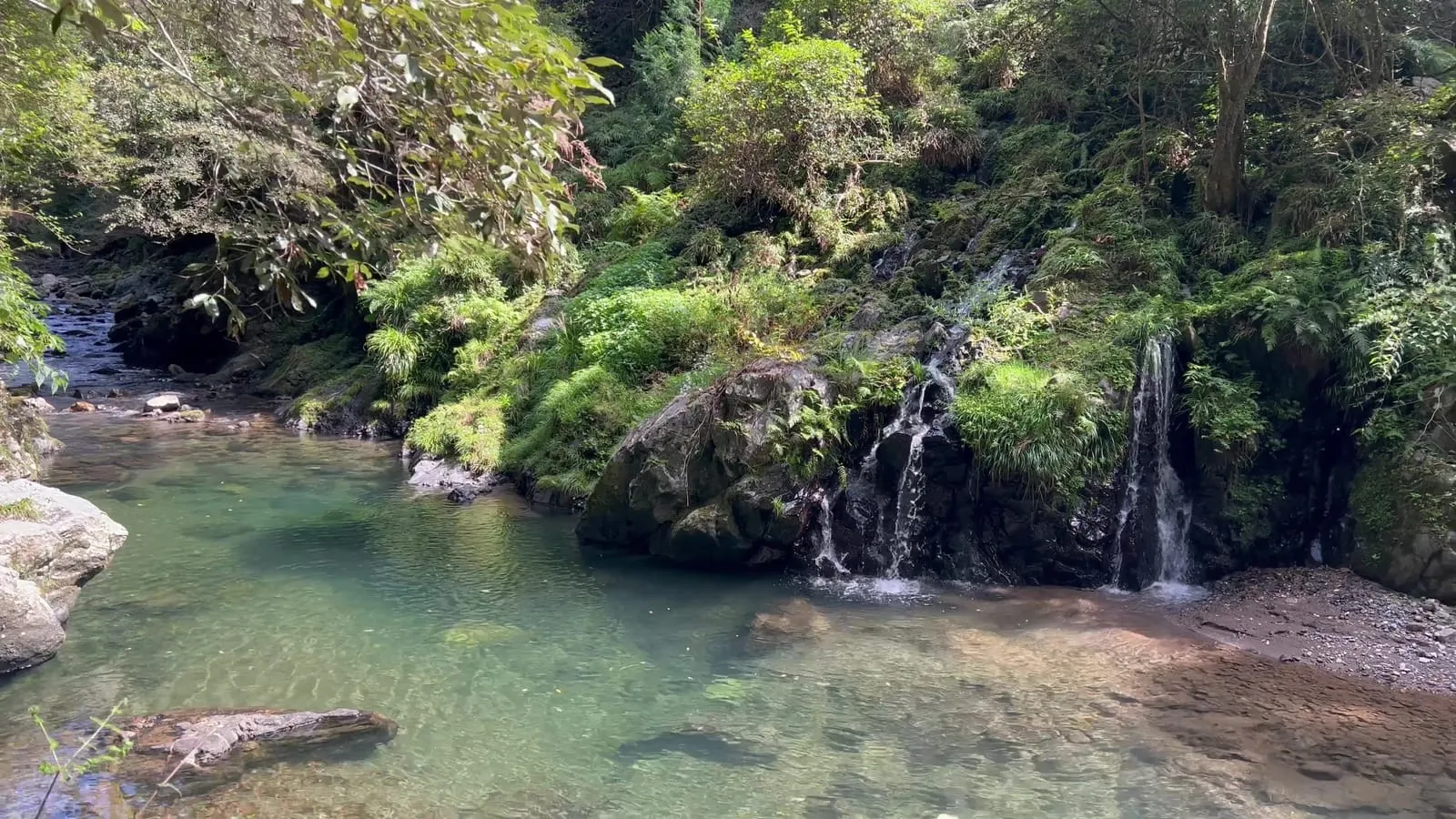
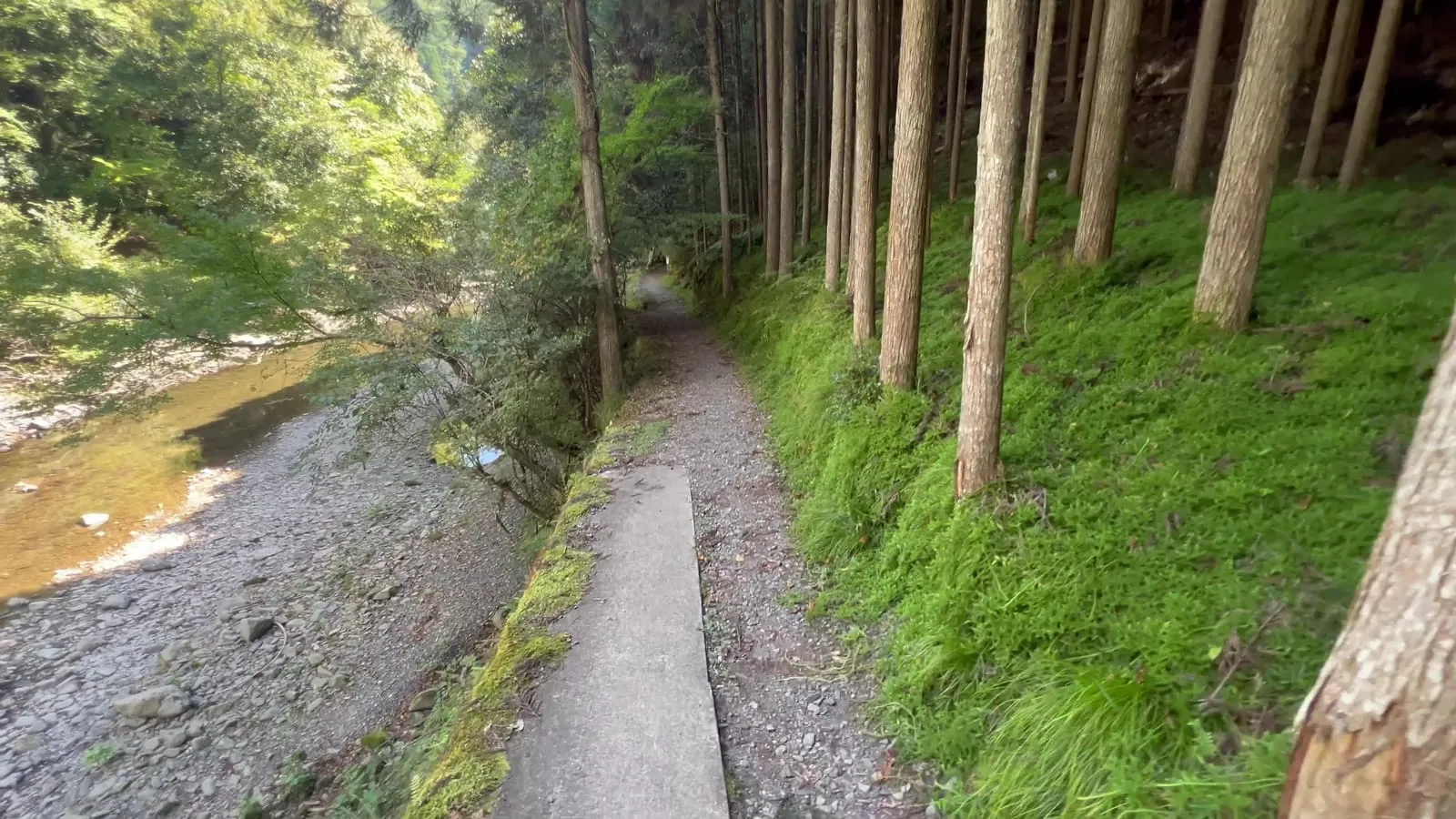
The area around Takao looked very upmarket. When a restaurant showed me its menu, I’d expected ¥3,000 at most — the prices were three to five times that. Flustered, all I could say was “Thank you for showing me,” and I quickly retreated. By then I had already walked more than 10 km. Further on was Sawa-no-ike, a pond as wide as a lake, and the trail stayed lovely.
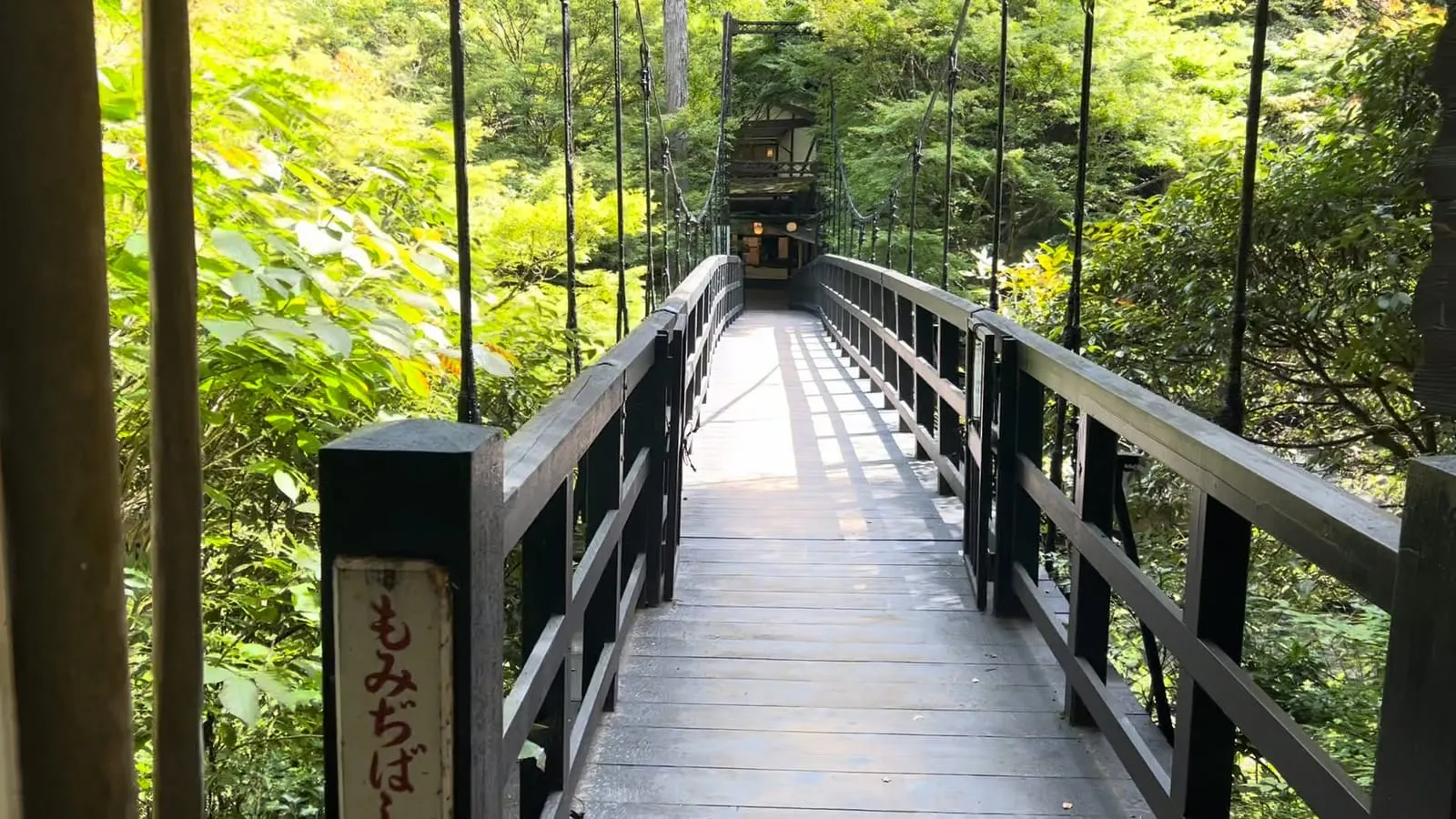
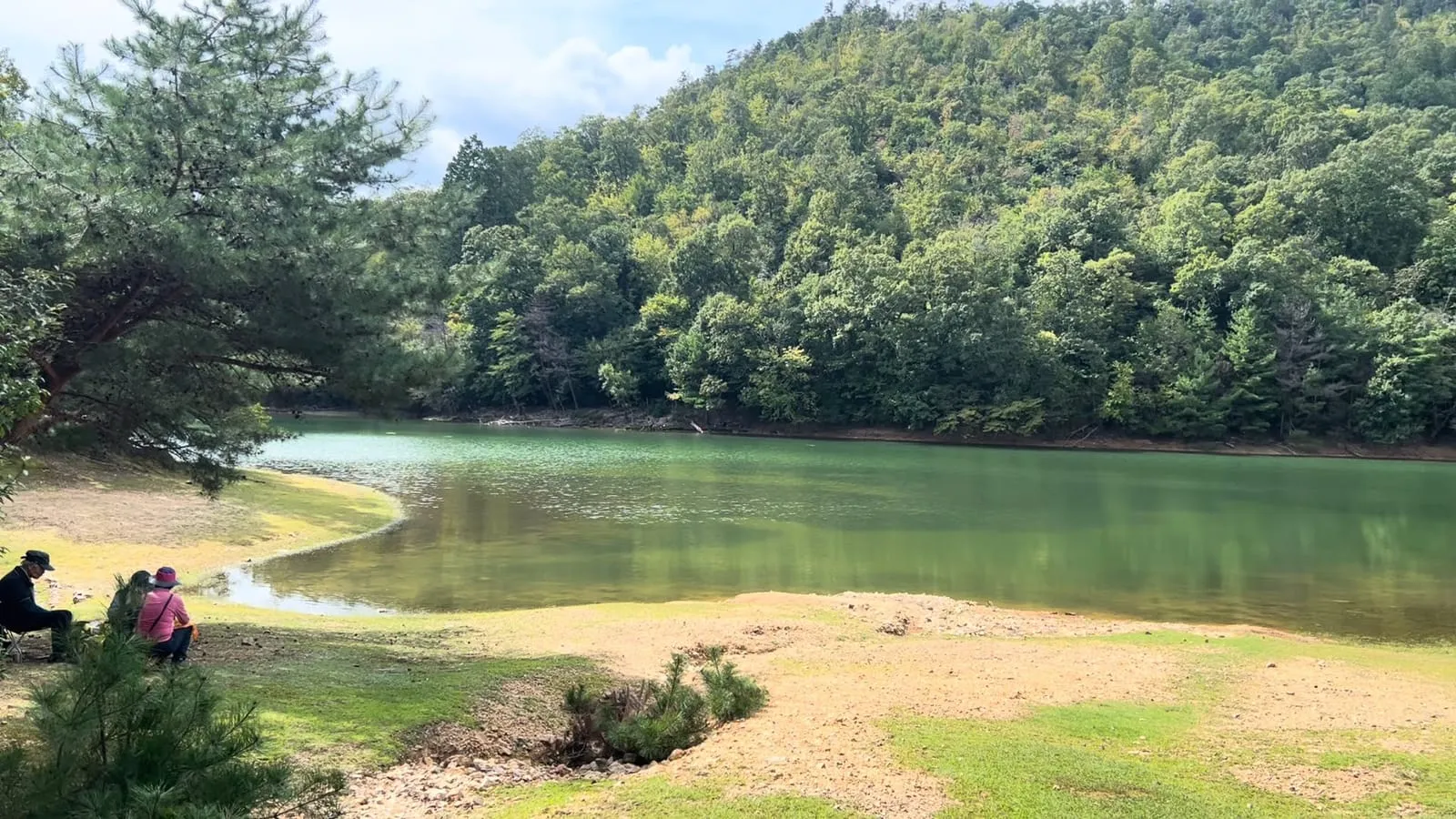
That day I wanted to cover distance, and I missed my chance for lunch. I walked until about 4 p.m. on bread and gummy sweets alone. By the time I was near Kurama, I was clearly short on sugar. My steps were unsteady, and with the worry of nightfall on top, even my vision seemed blurry. When I finally ate the rice I’d brought, there was so little salt that it barely tasted of anything. I had packed three meals of rice, all the same flavour — nowhere near enough. Feeling the lack of salt, I hurried toward Ninose before sunset.
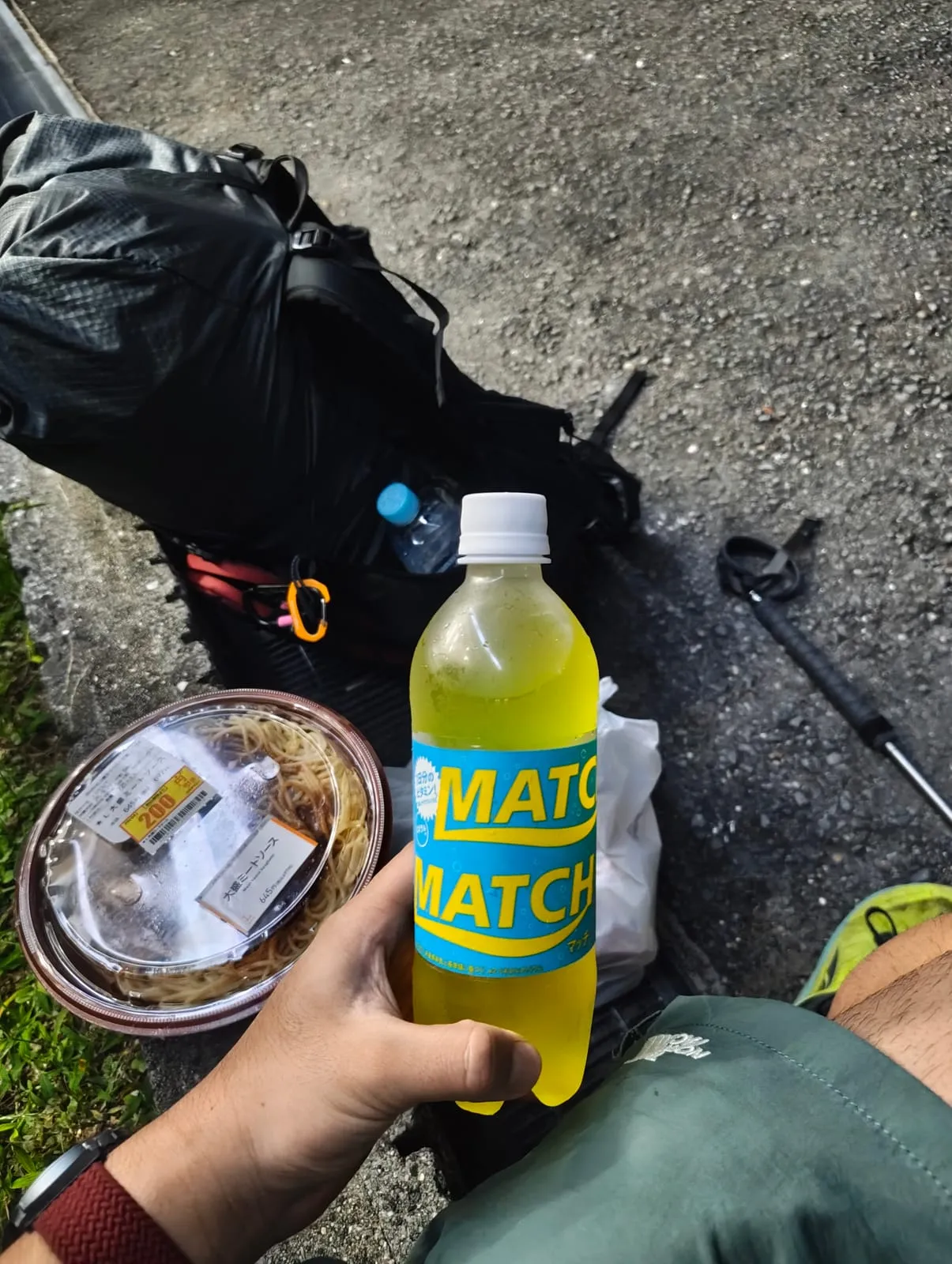
I made it to Ninose just before dark. A local resident kindly spoke to me, and I was able to spend the night beside the river. Dinner was a cheap extra-large serving of pasta, fish sausage, protein powder — and a bottle of Match, a Japanese vitamin soda. After a day of sweating with too little salt, that Match tasted so good I felt I’d been born for that moment. Perhaps thanks to the protein, I was still tired the next morning but had recovered to some extent.
Day 2 — Kurama in the fog, the village of Ohara, Mount Hiei in the rain (20.7 km)
Around 4 a.m., despite the forecast, it started to rain. I ate rice porridge under a roof, but again there was too little salt and it wasn’t good. Sleepy, and raining. I wasn’t used to mountains, let alone mountains in the rain. For about two hours I wondered whether to give up and go back into the city. But the way to Kurama follows a road, so I decided to just try walking. I set off around 8 a.m. and found I could manage better than I’d thought. I decided to carry on.
Kurama-dera was wrapped in fog and rain, with an atmosphere no photograph can capture. Kurama is a mountain of legends: the young warrior Minamoto no Yoshitsune is said to have trained here, and it is said to be home to tengu, long-nosed mountain spirits of Japanese folklore. I didn’t climb the mountain this time, but next time I’d like to.
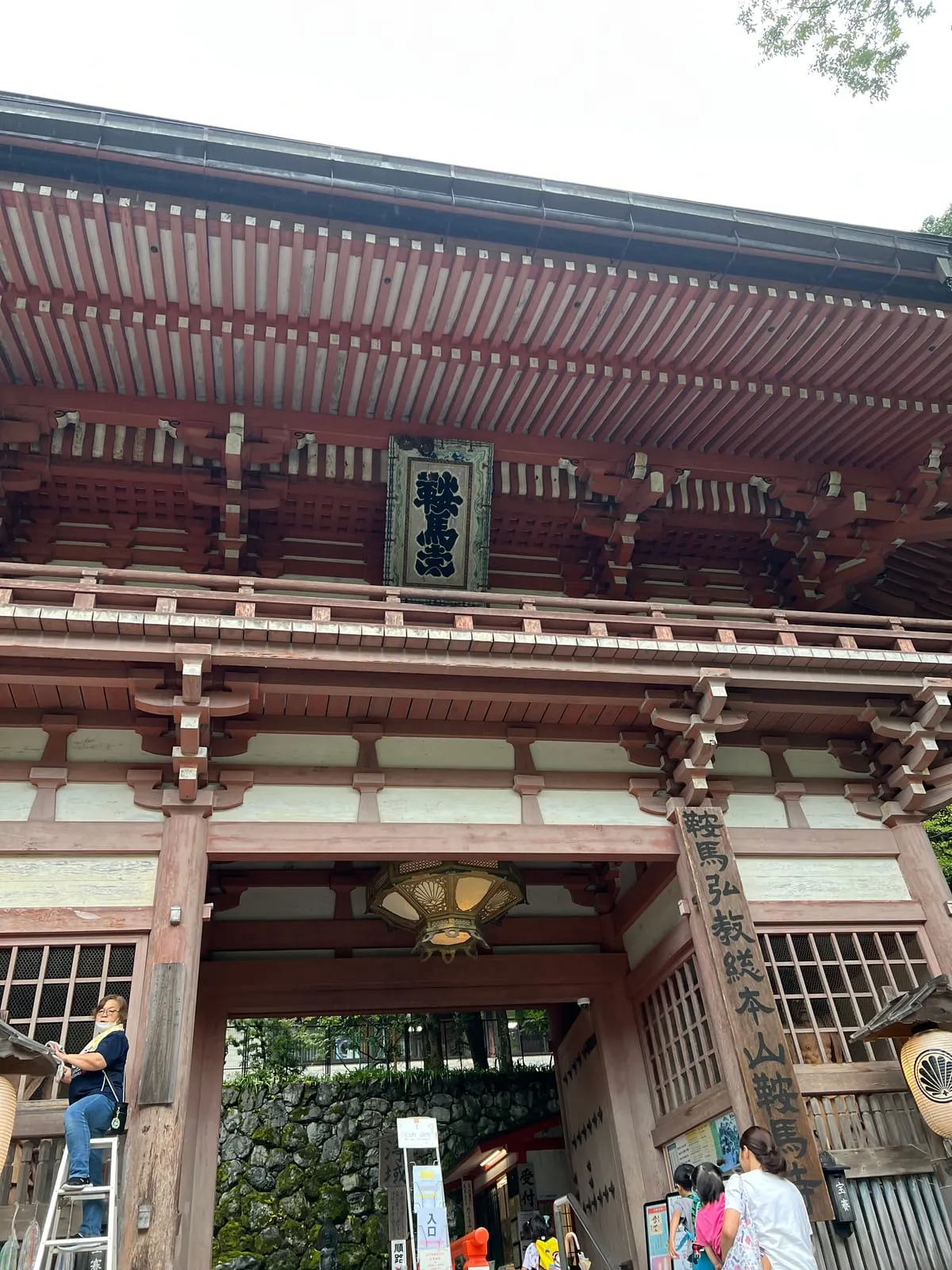
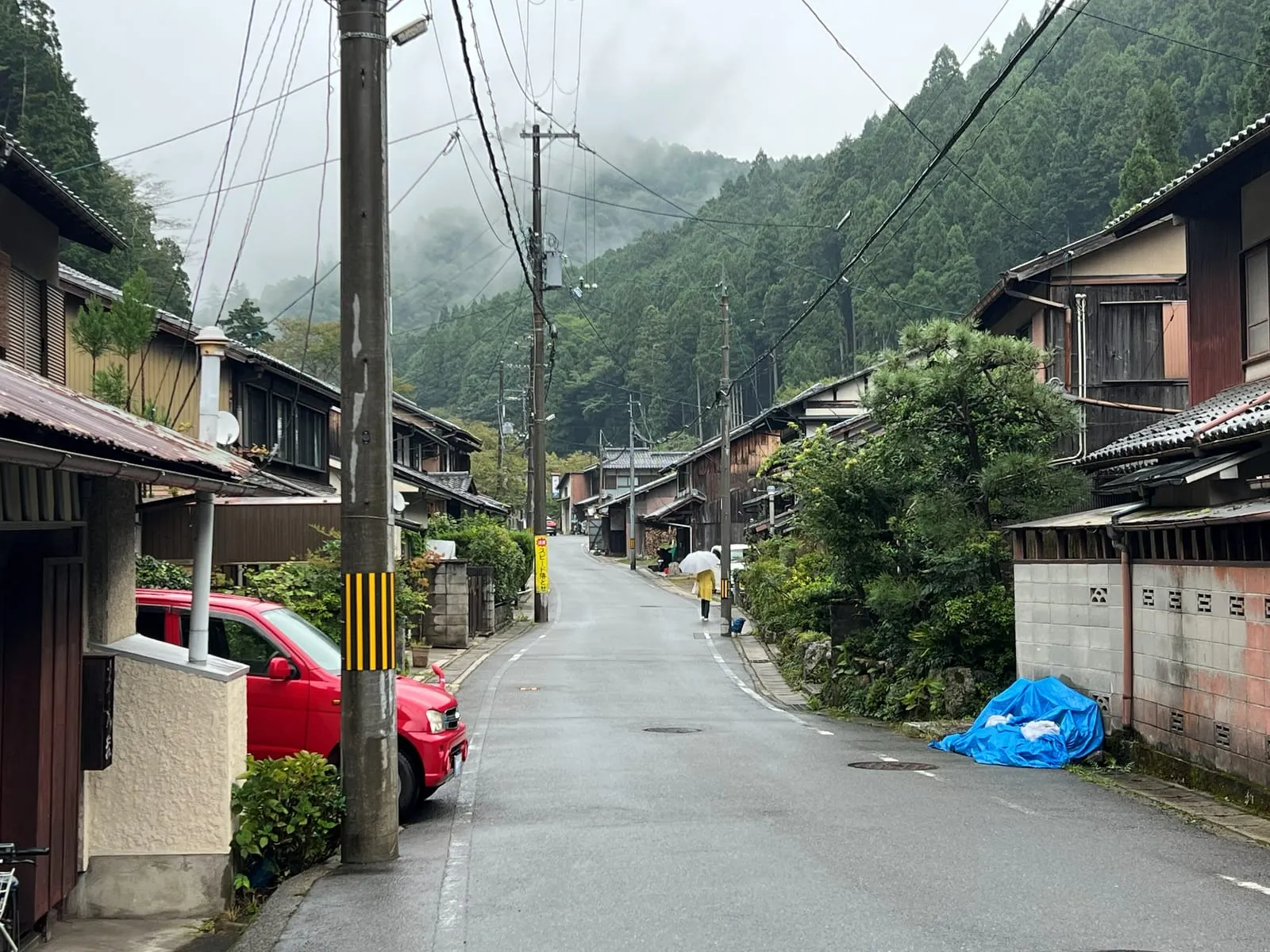
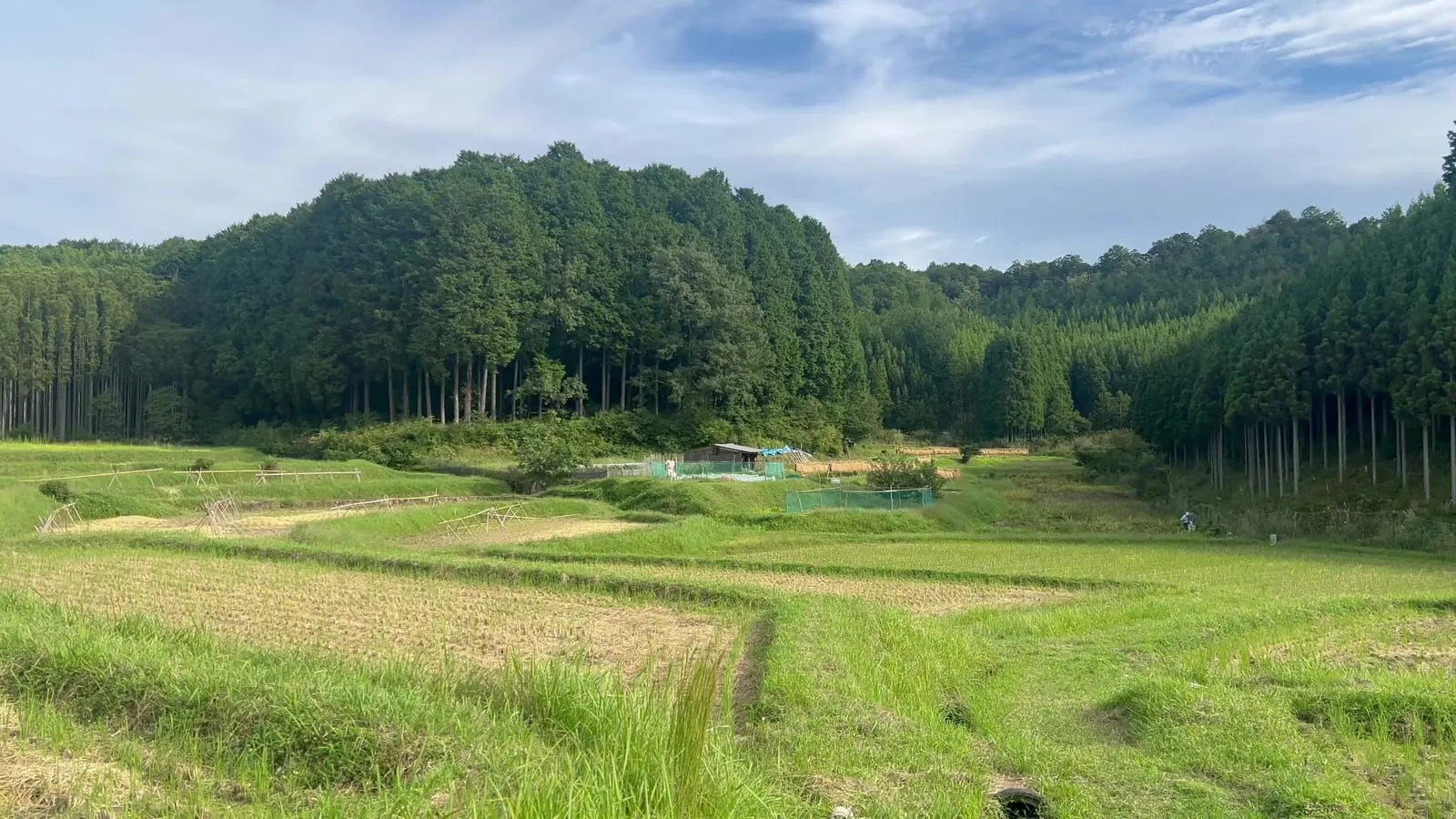
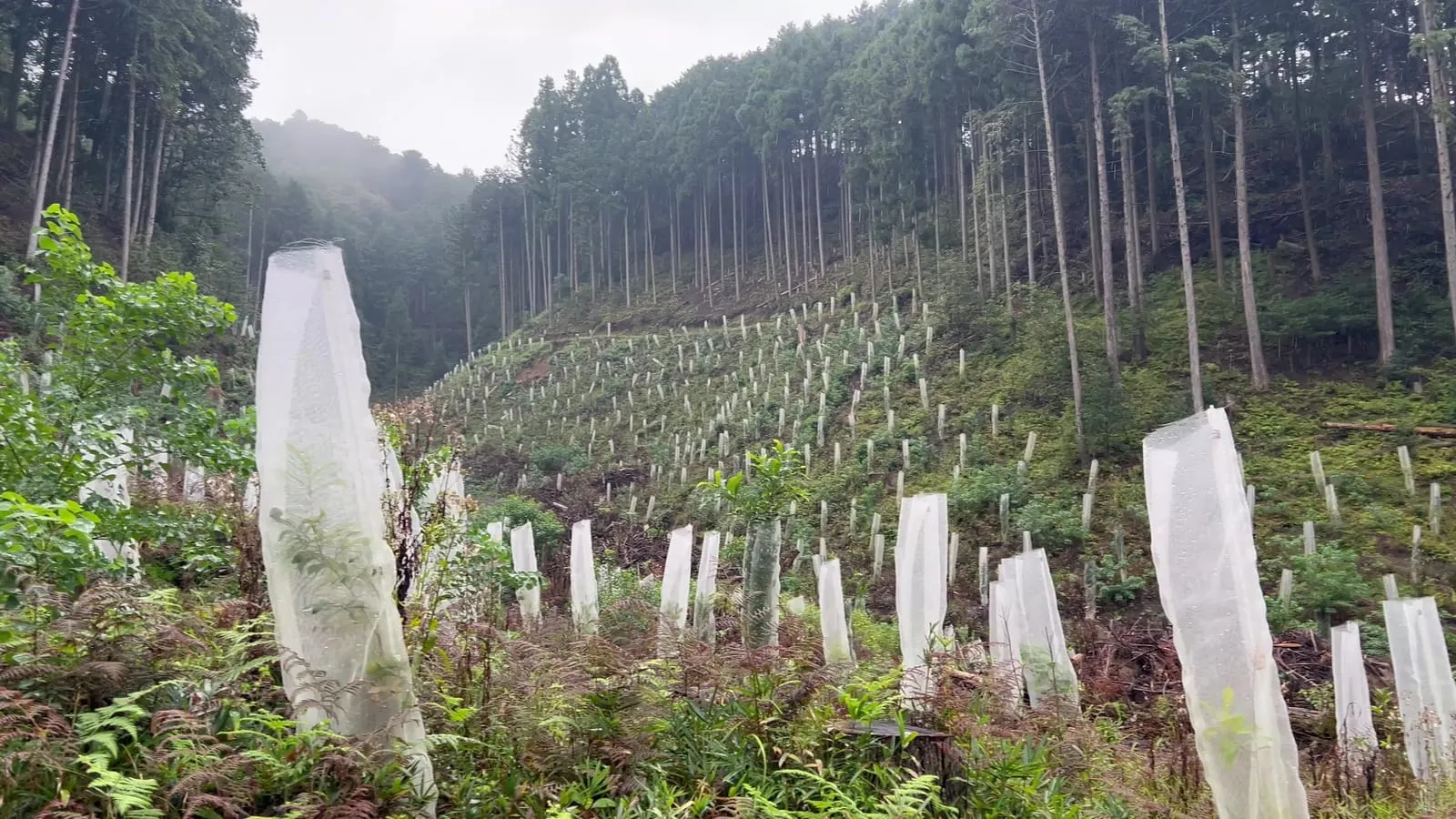
I crossed the Yakuō-zaka pass, passed through Shizuhara, and crossed one more mountain into Ohara. On the way, every single cedar sapling on a hillside had been fitted with a white cover, like something out of a video game.
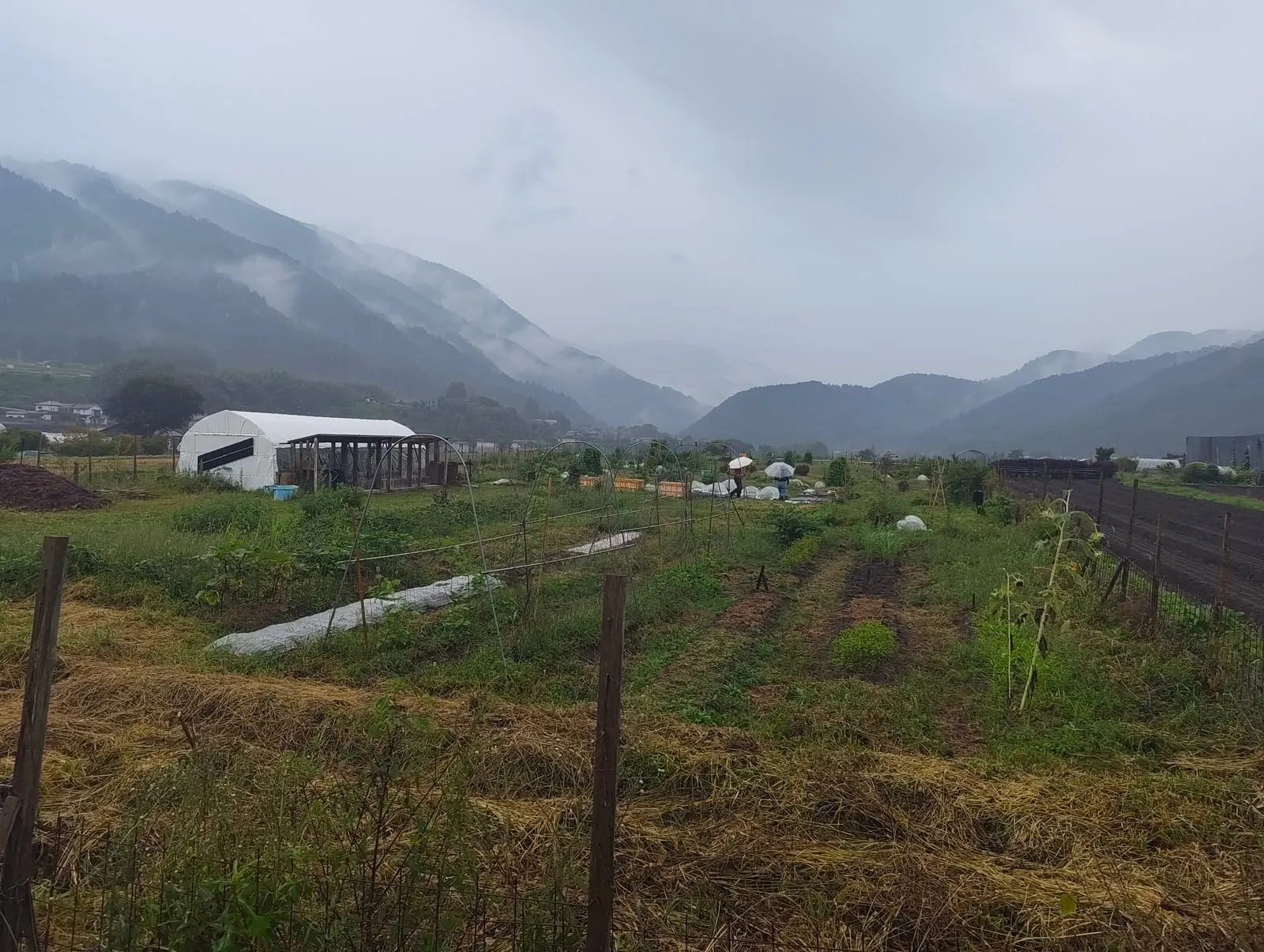
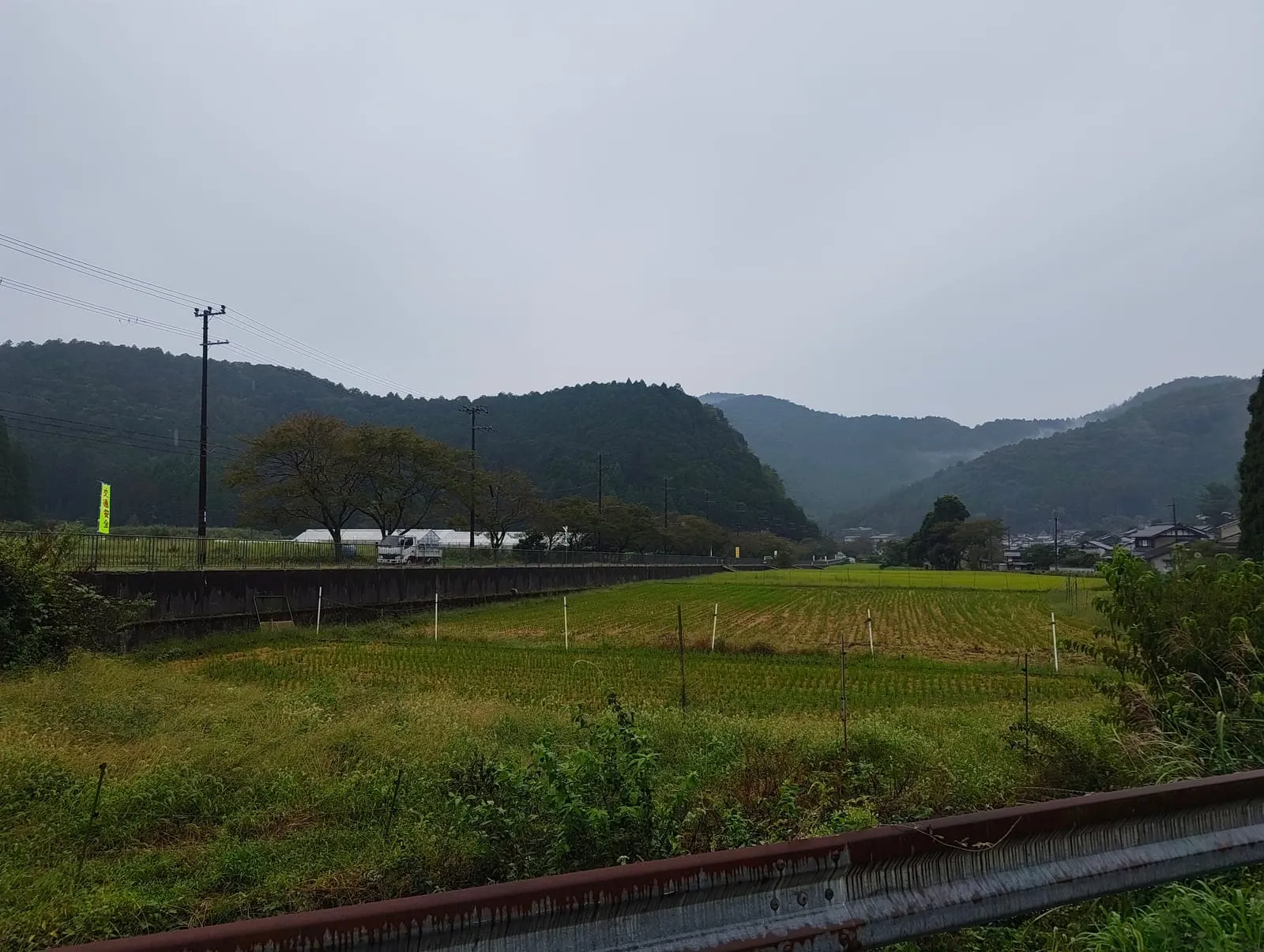
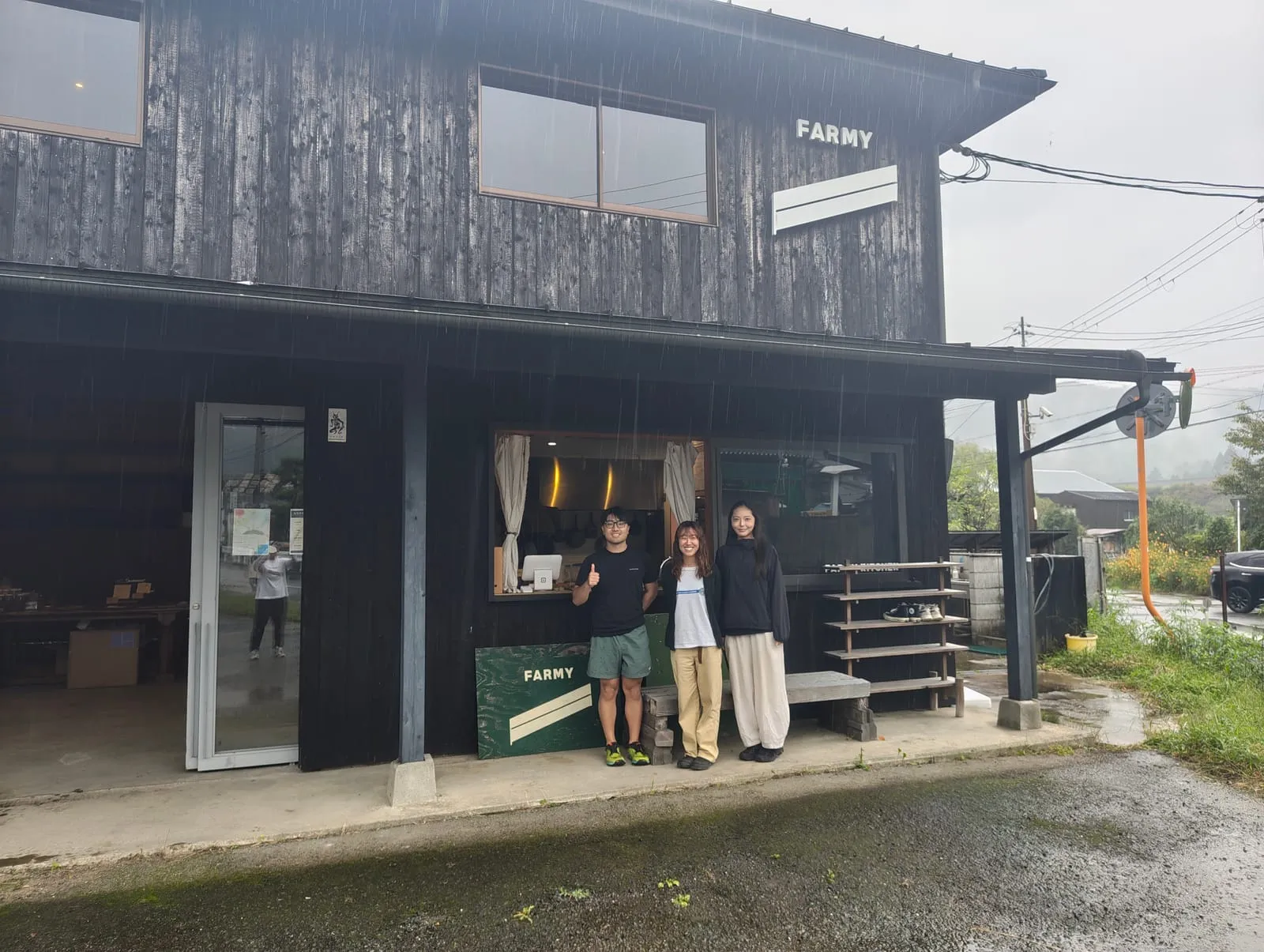
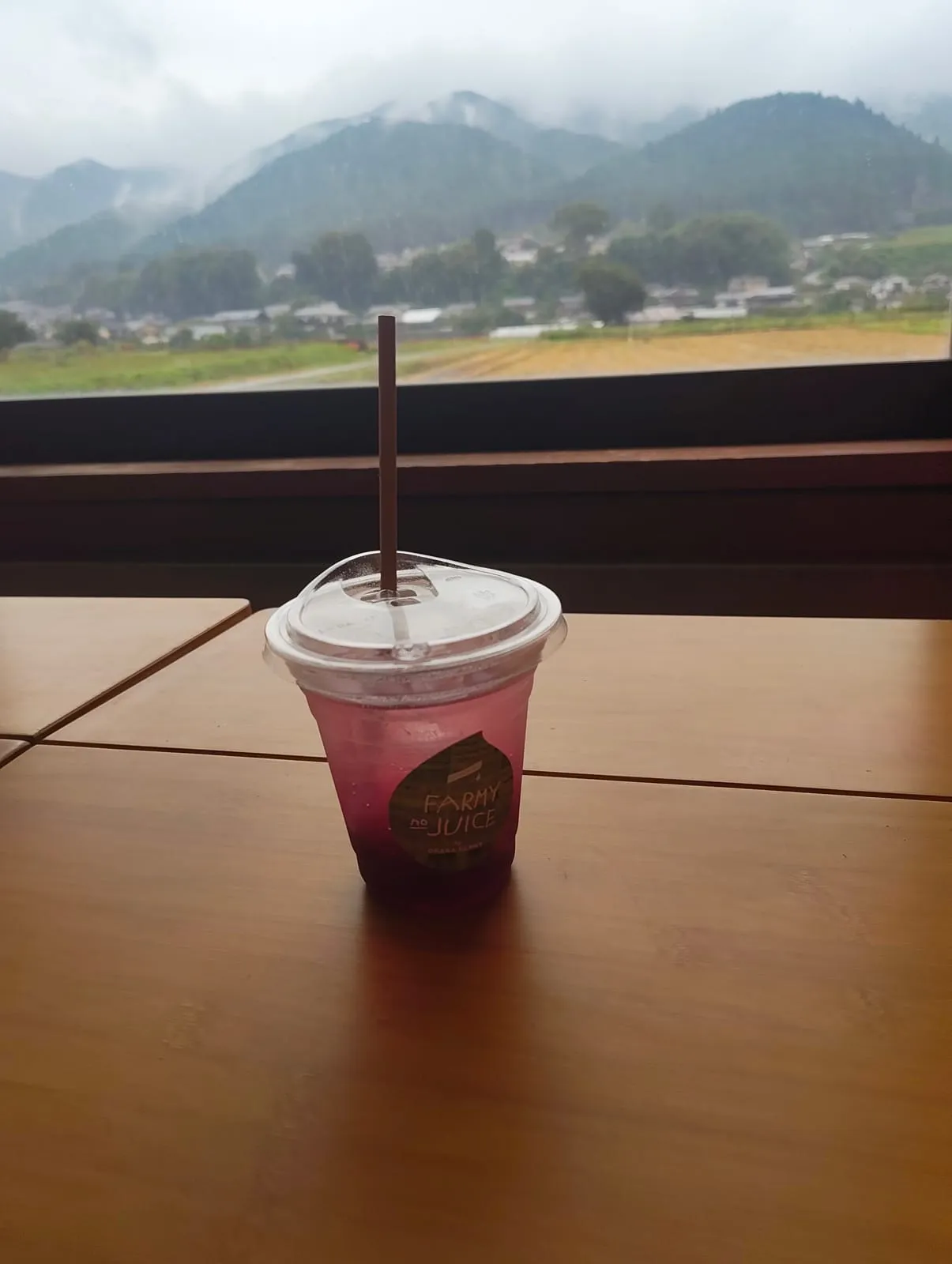
Ohara is a peaceful farming village of fields and rice paddies, with roosters crowing somewhere in the distance — the kind of rural Japanese landscape I love most. Among the old houses stood a modern building, Ohara Farmy, where I stopped for a shiso (perilla) juice. There were many young people, and the place is home to a community of farmers and a shared-garden project where families farm plots together. When I told the people who spoke to me that I was walking the trail and that I want to work on revitalizing rural Japan, they found it interesting. As we talked, new ideas and insights started to form in my own mind. Before I knew it, we had been talking for an hour.
Something one of them said has stayed with me ever since: “If you love the mountains, won’t you return to the earth someday?” Somehow, it made complete sense to me. It struck me deeply, and became words I’ll never forget. It felt like a warm place that would welcome anyone walking the trail.
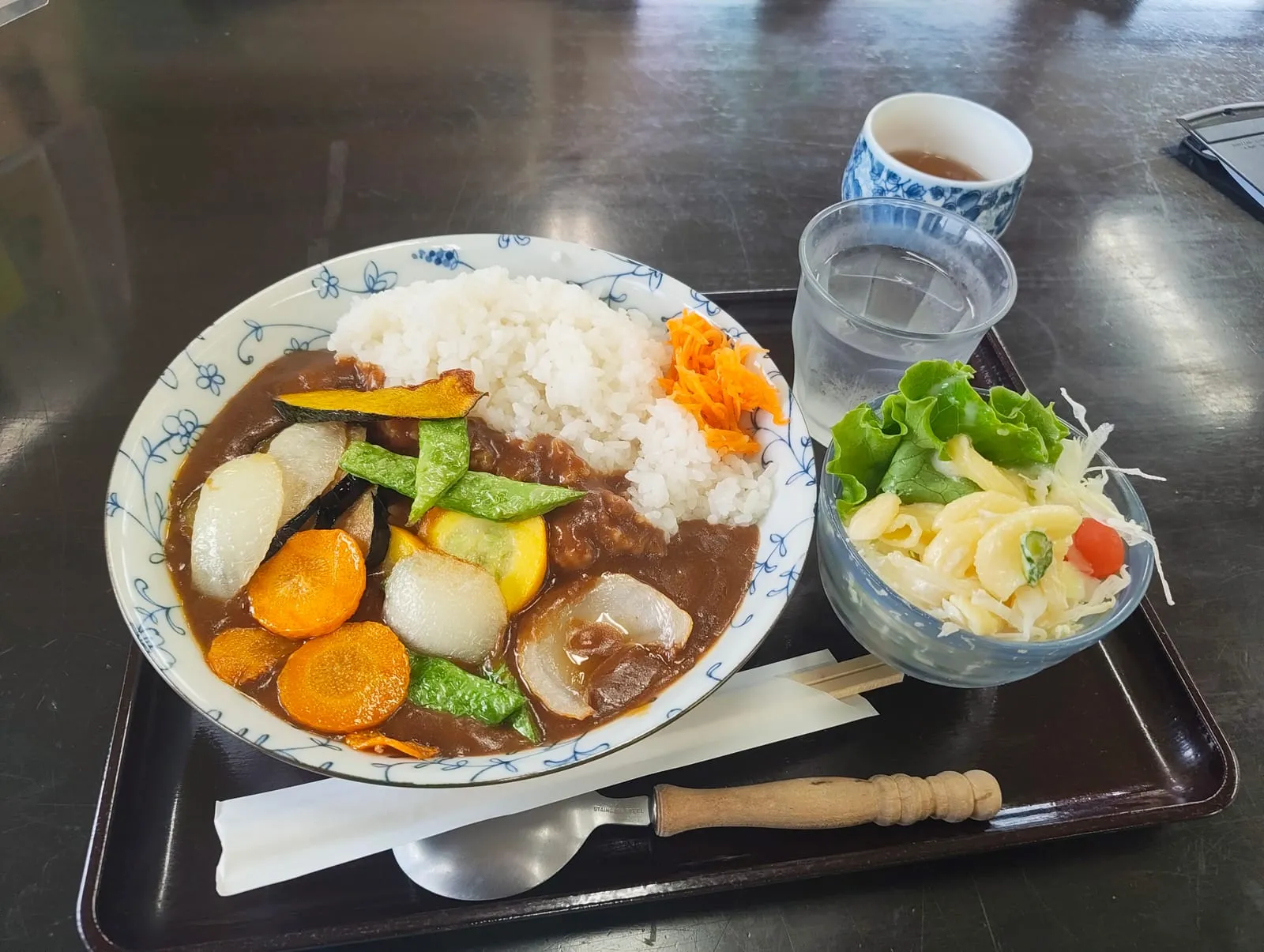
Afterwards, on a whim, I had curry at Sato-no-Eki Ohara, a local farm shop and restaurant. Topped with fried vegetables, it soaked right into my tired body — possibly the best meal of the whole trip.
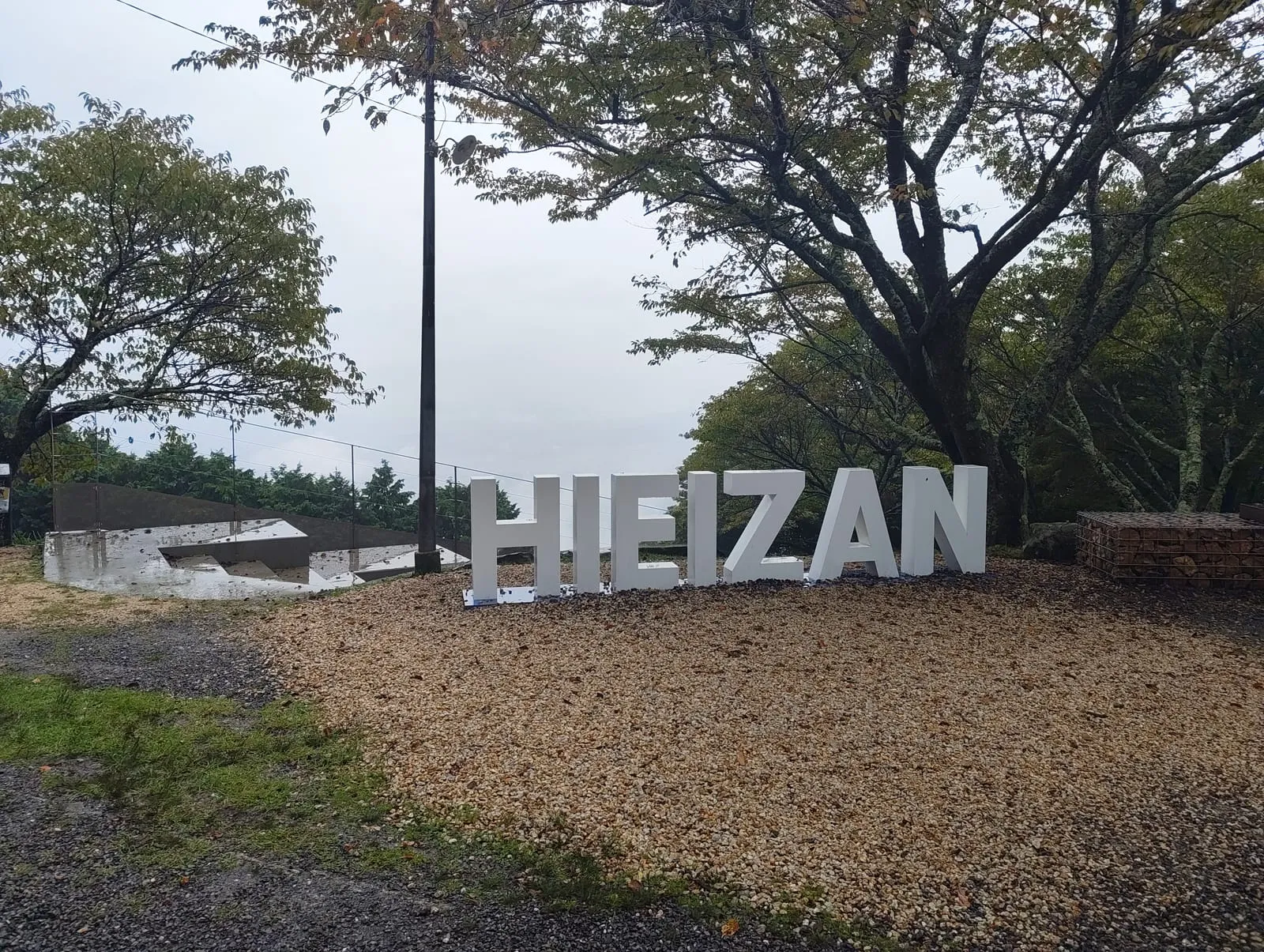
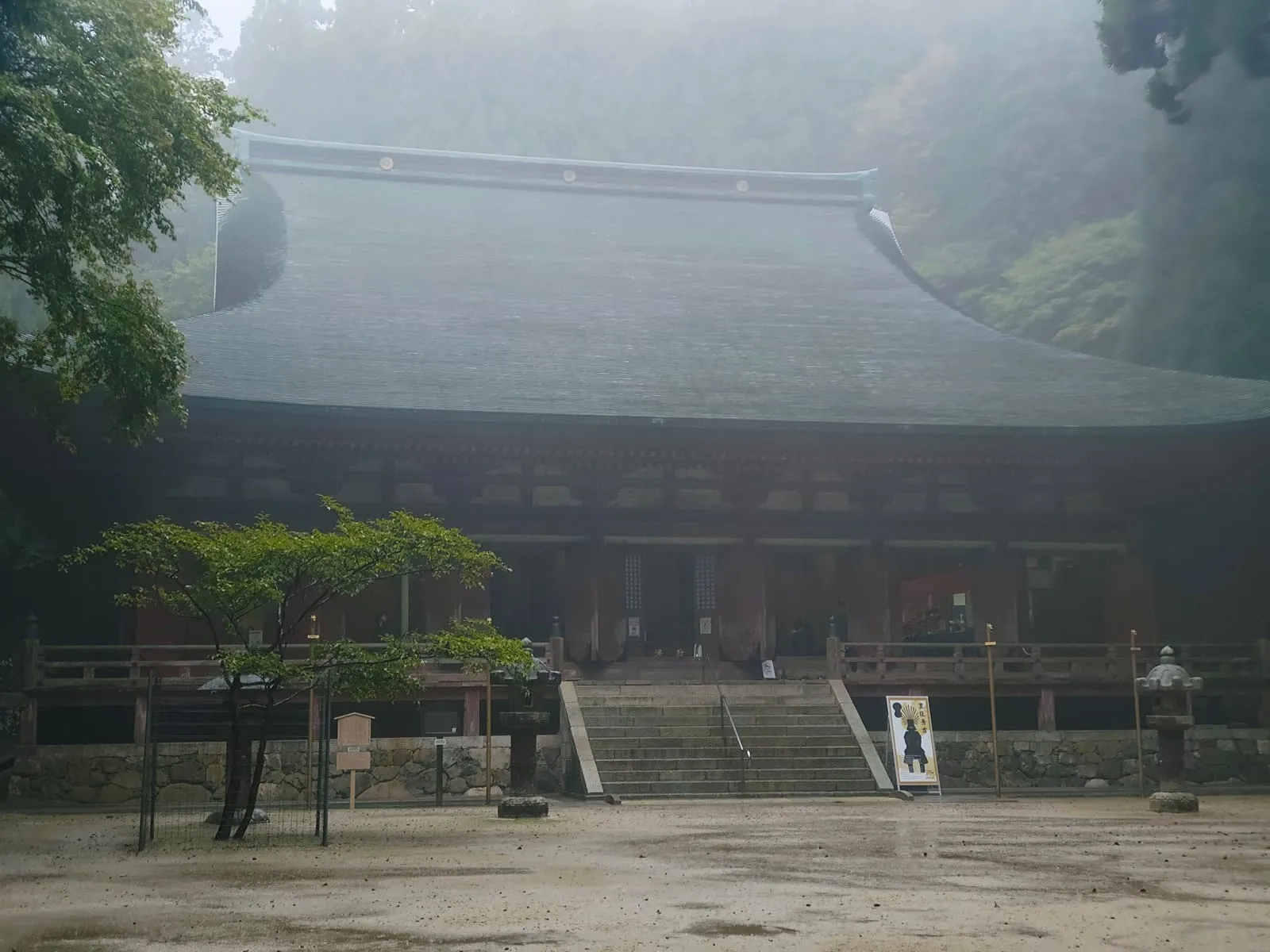
From there, on to Mount Hiei. From Ohara at about 200 m to around 800 m, the climb never let up. The fog was so thick I couldn’t see 10 or 20 meters ahead, and the air was cold. Alongside the fear, I felt strongly the sacredness of the mountain and a kind of awe that only mountains inspire. Mountains are frightening. But I also learned something new: people can walk, even in the rain.
Mount Hiei is home to Enryaku-ji, the head temple of the Tendai school of Buddhism and a UNESCO World Heritage Site, and for over a thousand years it has been one of Japan’s great centres of religious training. Far away in Kyushu, on the Kunisaki Peninsula, there is a mountain temple once known as the “Mount Hiei of the West” — I wrote about what its priest told me in “The Mount Hiei of the West.”
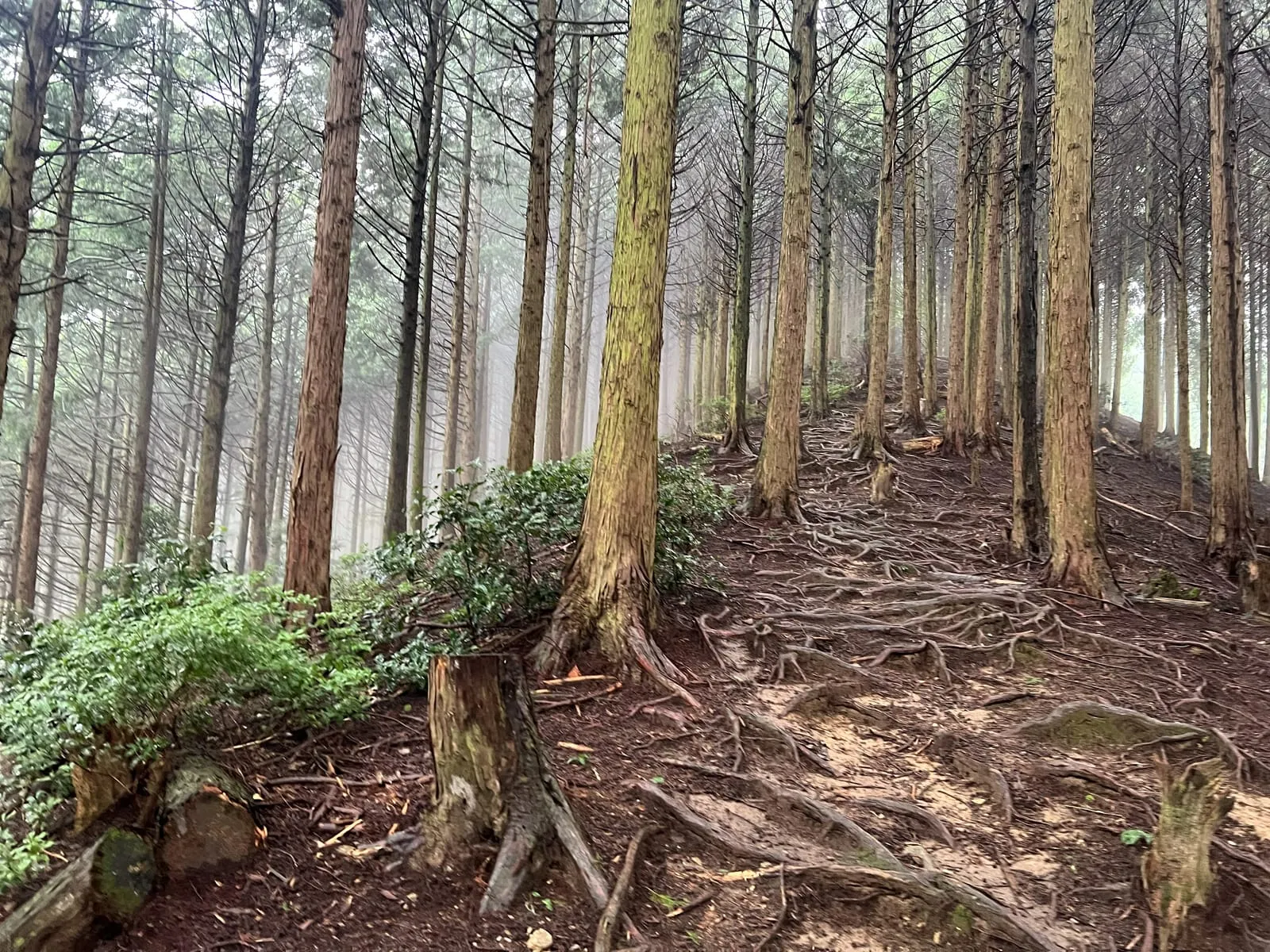
Near the summit I could see nothing, and the way down was a steep, slippery slope. I was being careful, yet I stepped on a slick spot and fell hard. If I had kept sliding, it could have been truly dangerous.
By the time I arrived, I was covered in mud. After two days without a bath, my sweat never dried, and my clothes and hat smelled terrible. I swapped the hat for a bandana, and by the time I came down I looked like a wandering ascetic monk. Even so, Mount Hiei in the rain was solemn and otherworldly — exactly the image of a mountain of strict religious training. At 4:10 p.m. I reached Cable Hiei Station and, because of the rain, took the cable car down and called it a day.
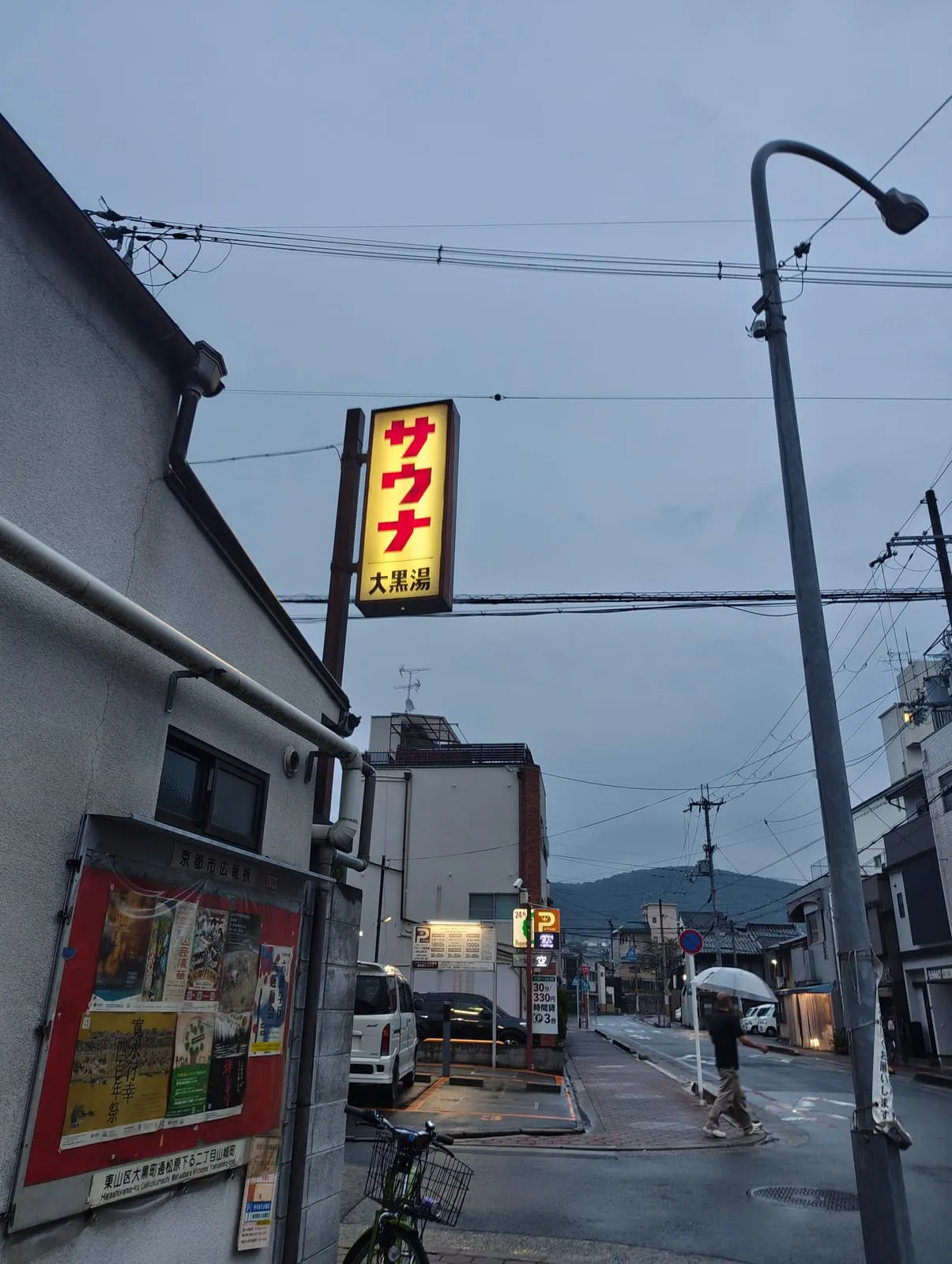
That night I stayed at Guesthouse SIGN in Shijō. Before that, I went to Daikokuyu, a public bathhouse (sentō) I’d also visited in June. It’s run by a Kyoto University student. On that earlier visit we had talked, and I’d been recommended a Western-style diner, Grill Fukuya — so I went back there too, and ordered their “Fukuya Rice,” an omelette-rice dish. The owner asked me all about the day: how far I’d walked, my plans for tomorrow, and even my university and my future. Having somewhere on a journey where you can just relax — that, to me, is one of the joys of travel.

Day 3 — Ginkaku-ji to Fushimi-Momoyama (29.5 km)
Climbing Mount Hiei again would have cost money and time, so I restarted near Ginkaku-ji, on the Philosopher’s Path. It was Sunday, and the path was quiet in the morning, but once in the mountains I met plenty of trail runners and older hikers. Higashiyama, the eastern hills, is packed with sightseeing spots, and its mountains are low — even the highest, Mt. Daimonji, is only about 465 m. It was a long day, but a relatively easy course. Around 11 a.m. I had a cup of instant noodles at the Higashiyama summit park. I’d picked them for the price, and they tasted like it.
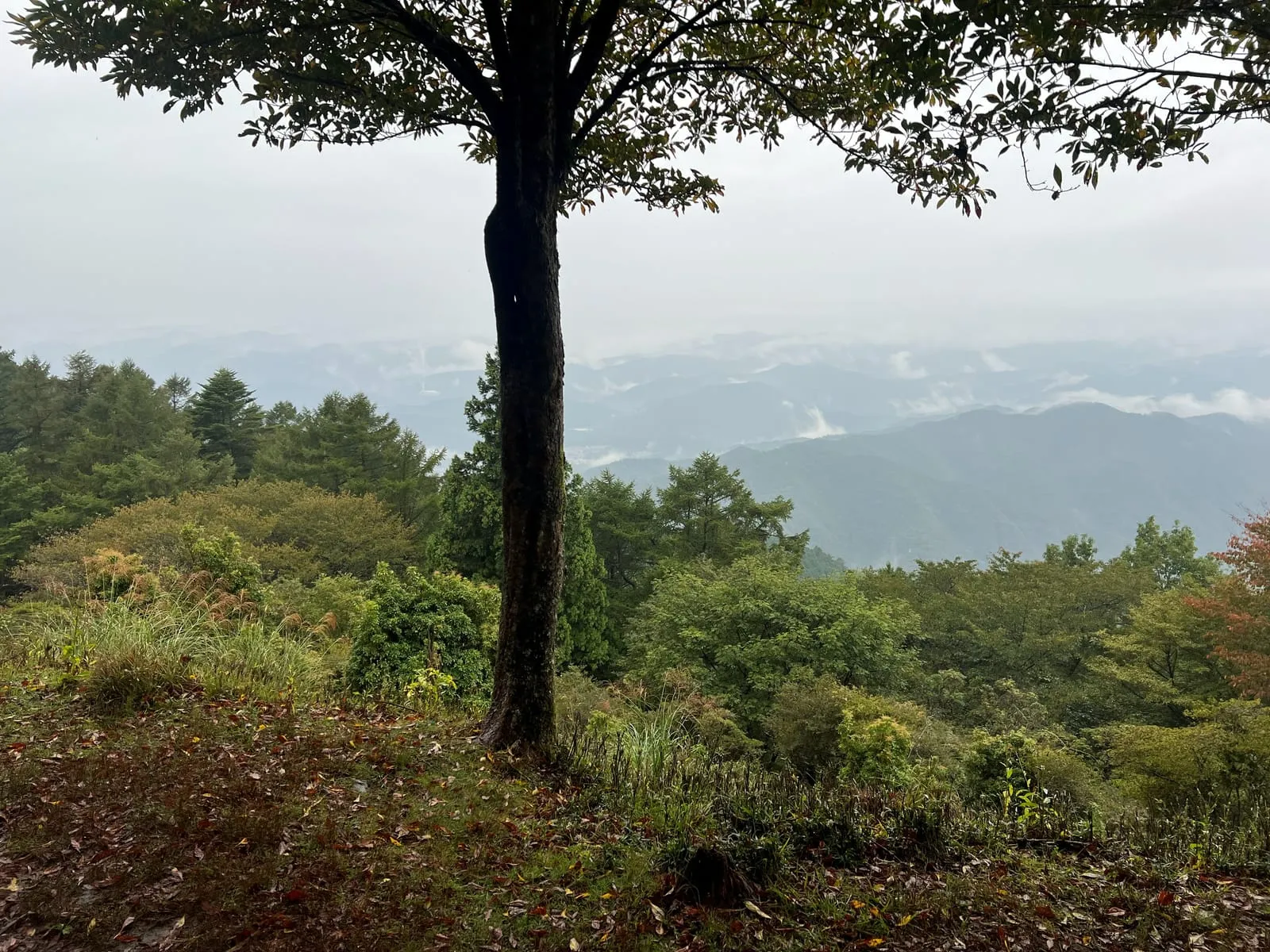
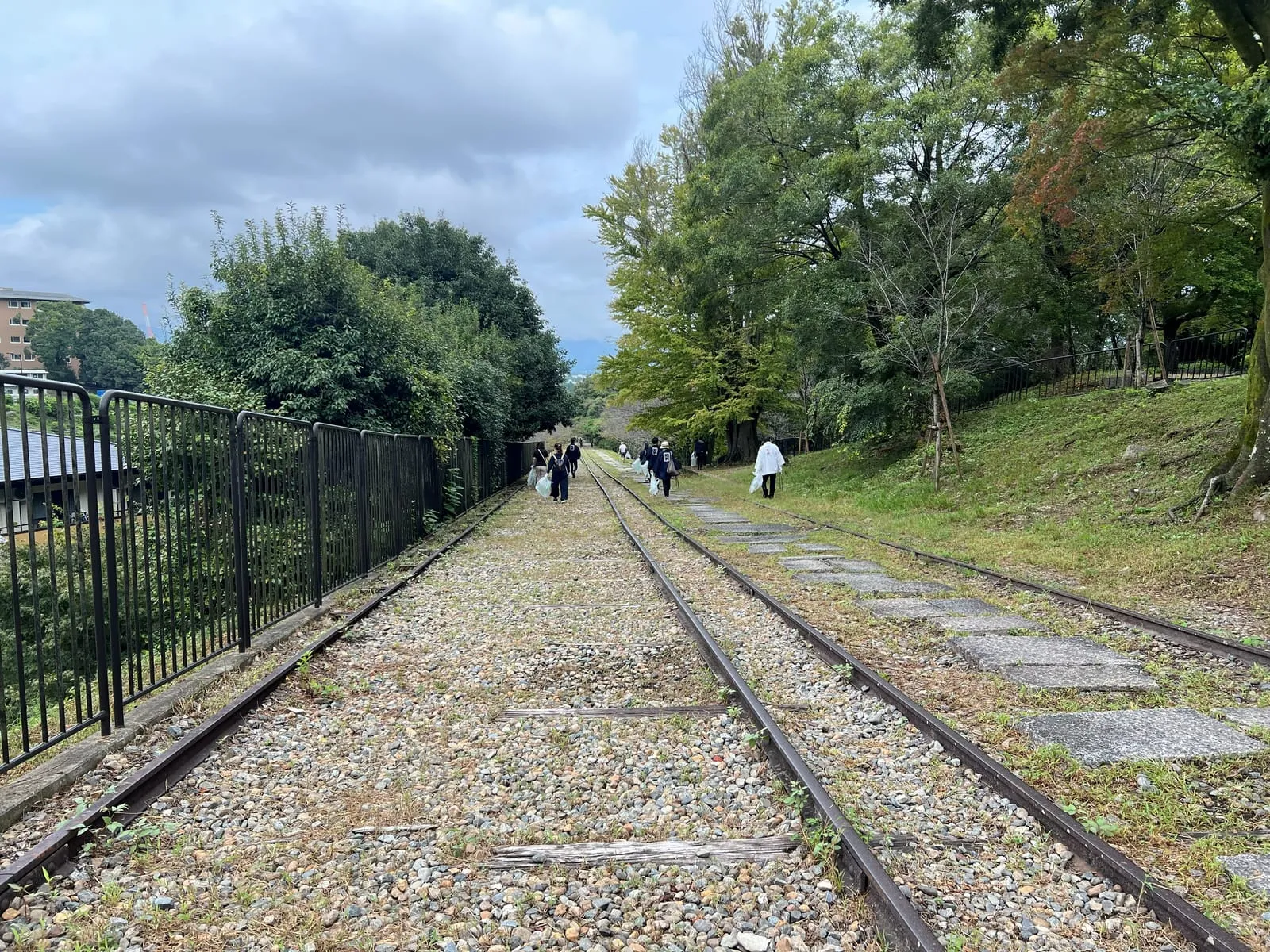
Mt. Kiyomizu, which I’d been looking forward to, had no view, and I couldn’t see Kiyomizu-dera at all. From there to Fushimi Inari, steep asphalt slopes went on and on. There were so many travellers from abroad that I wondered where they had all walked from. How had they found out about this trail? I wanted to ask them.
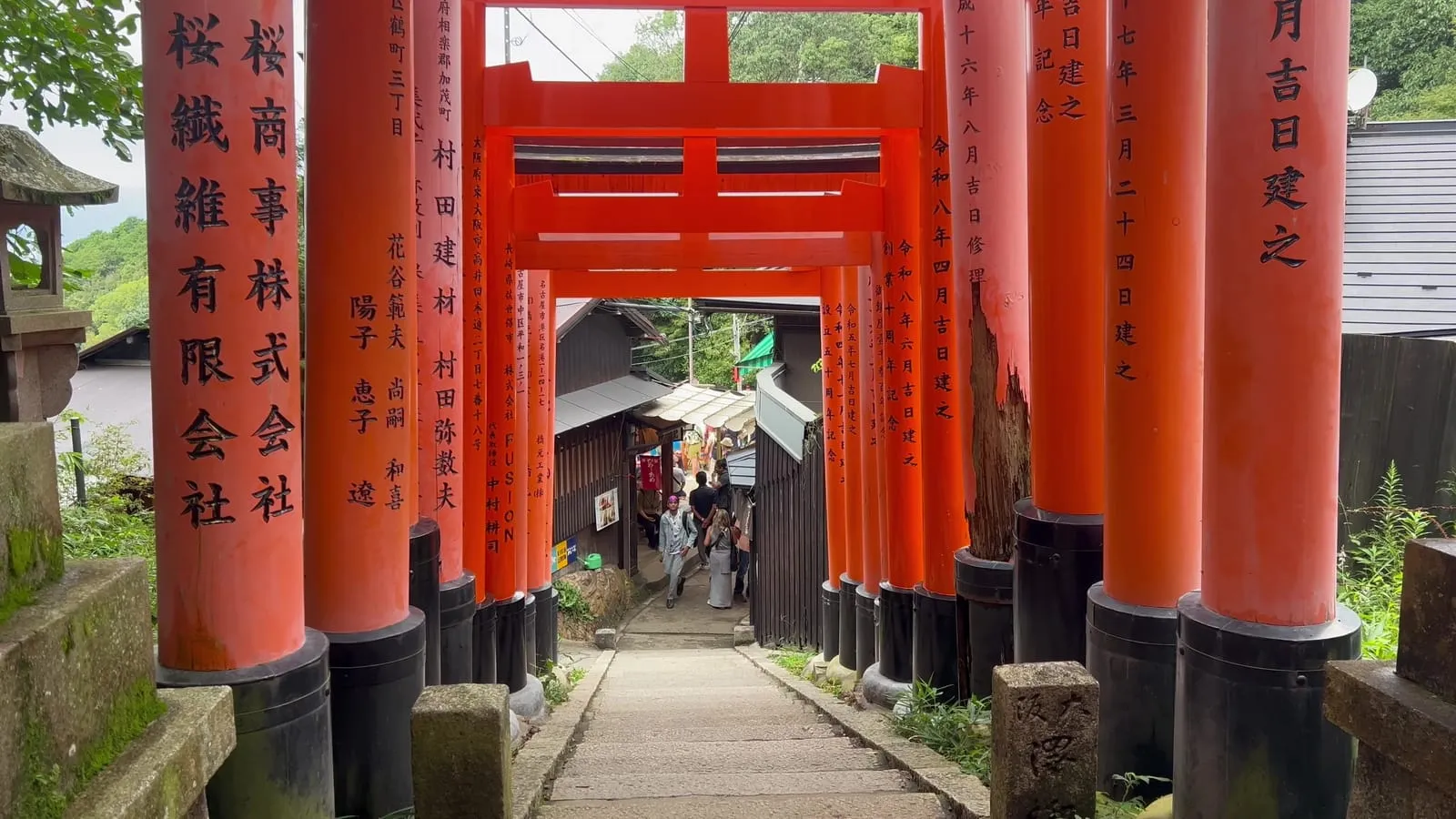
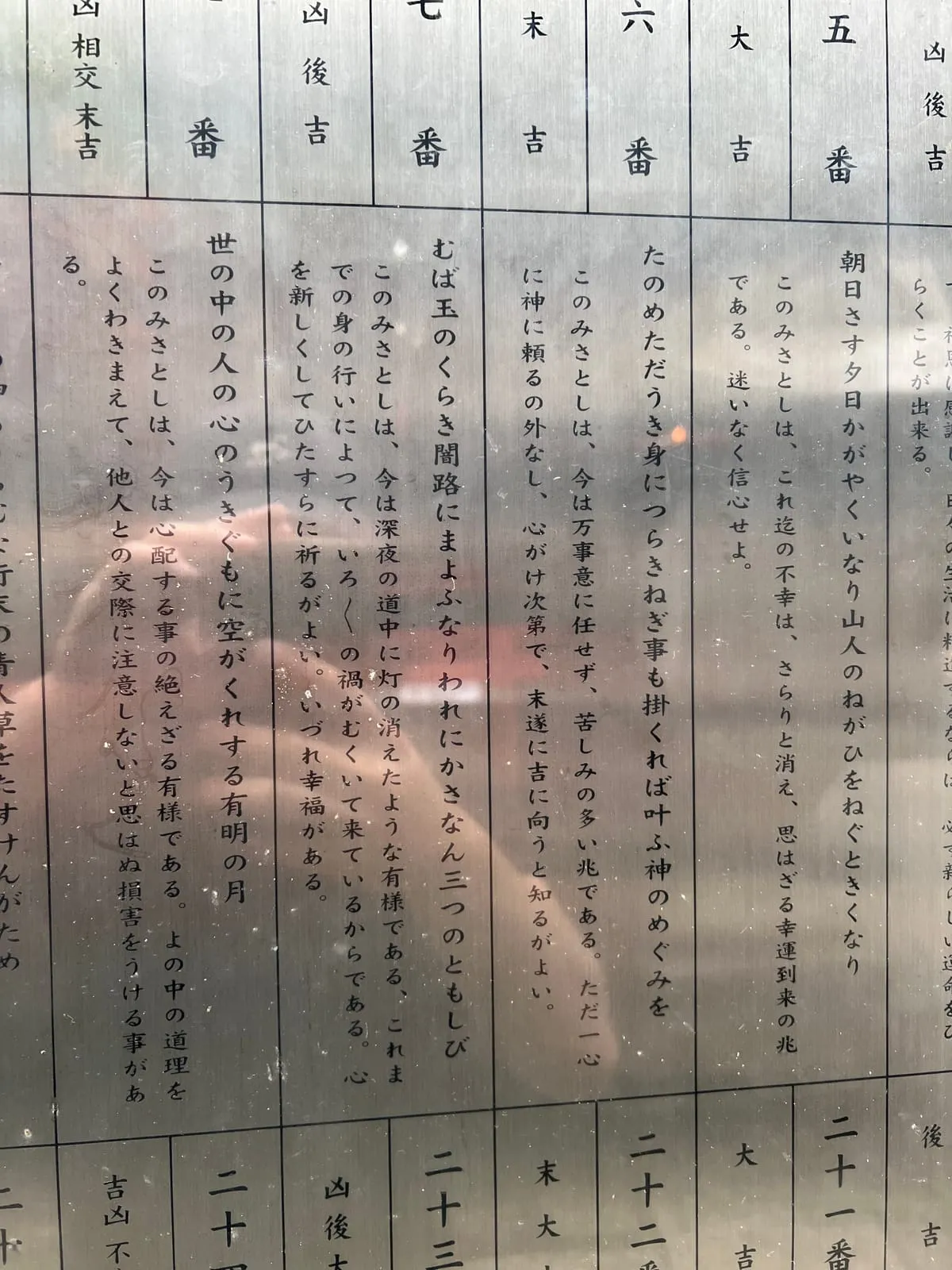
At the viewpoint on Mount Inari, I met a Japanese couple who were stopping passing foreign visitors to help with directions, and they pointed out the buildings we could see one by one. Fushimi Inari Taisha, famous for its tunnels of thousands of red torii gates, is one of Japan’s most important Shinto shrines. Just as I reached the top, it started to rain, and I got by with an umbrella and a Gore-Tex rain jacket. My omikuji fortune slip read kyō-go-kichi: “bad luck, then good luck.” Not great, but not terrible either. I’ll have to work hard from here, I thought.
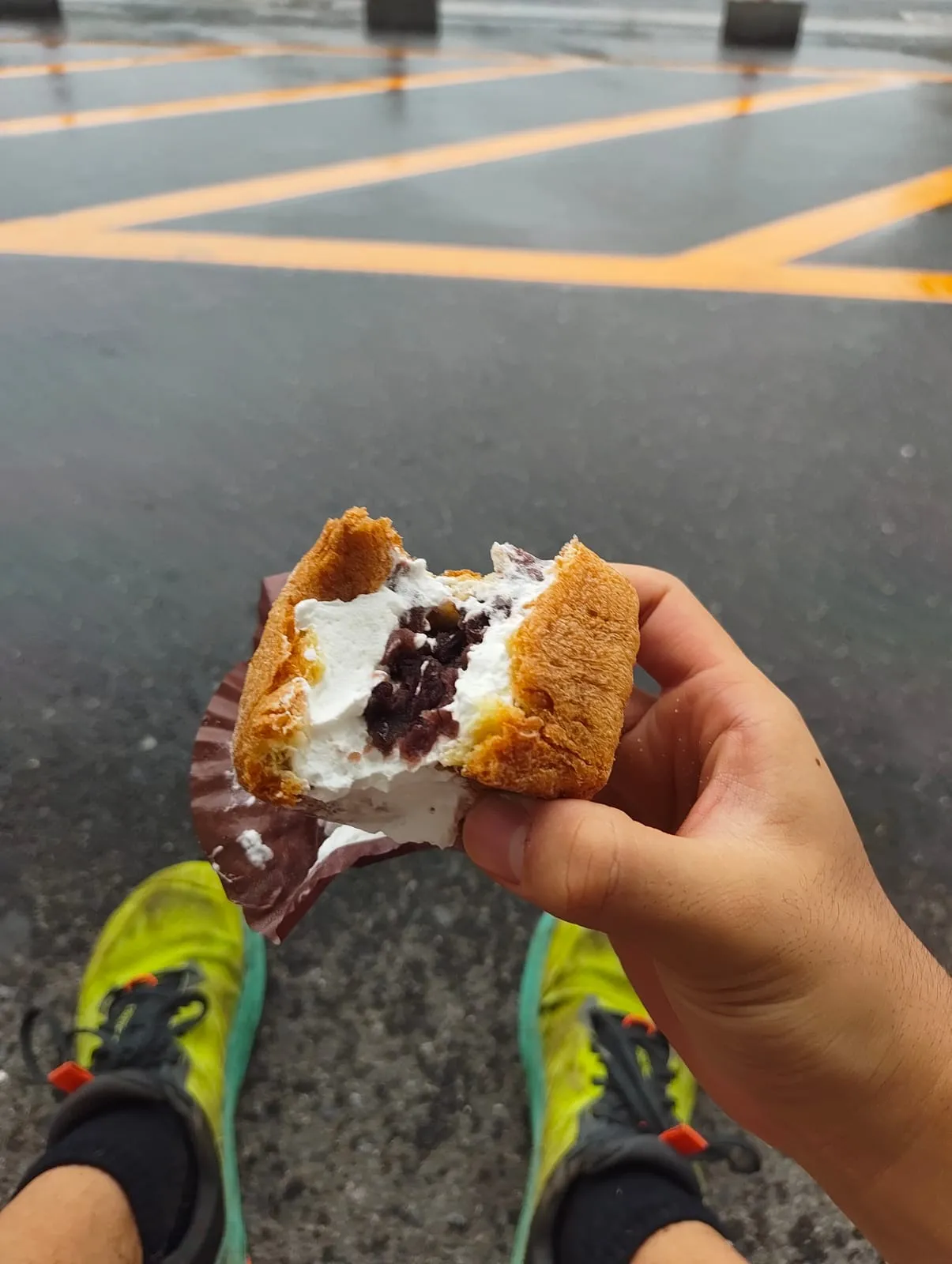
All I’d eaten that day were instant noodles, so, just like on day 1, I ran out of energy. Down from Mount Inari came a long road walk in the rain with no views. I walked into a stylish pastry shop looking like a hiker soaked in sweat and rain, and got a brief curious look. I bought a canelé, a bean-paste bun and a daifuku rice cake, picked up some milk at a convenience store, and sat on the ground under its eaves to eat. It was rich and a bit heavy.
The rain grew heavier and the temperature dropped. My wet body got cold, and I was shivering. The route followed roads the whole way, and the hard asphalt jarred my feet with every step — it really hurt. Fatigue, cold and rain all hit me at once.
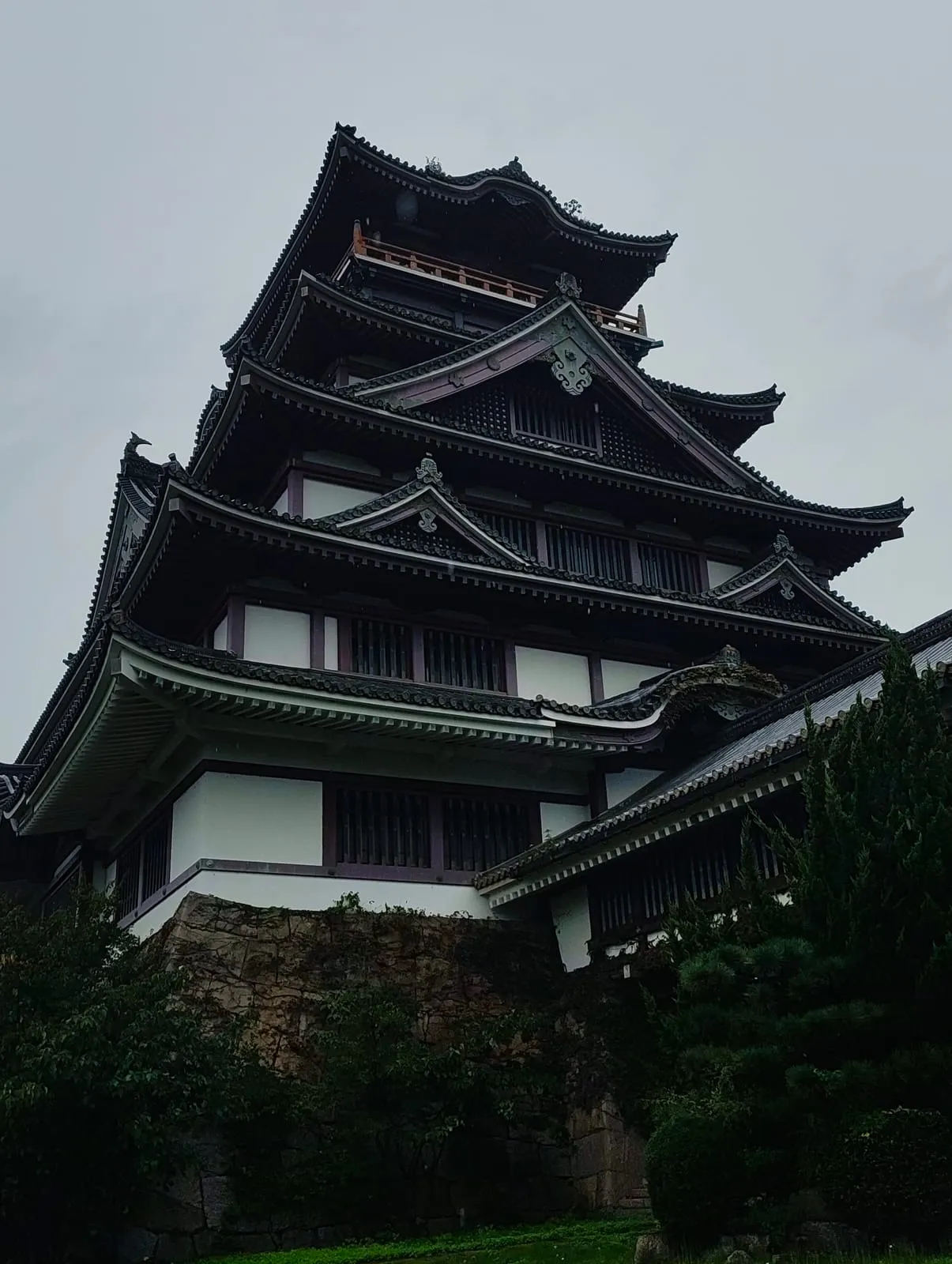
The last mountain was Mt. Ōiwa. The rain grew even stronger, and the trail turned into a stream. Shrine and mountain felt like one, and I almost felt the mountain refusing to let me in — I could feel the severity of Japan’s mountain worship, and an awe of the mountain itself. I was being tested. This, I thought, was the final trial. At the top, clouds and rain hid almost everything. But one thing was clear: Fushimi-Momoyama Castle, the finish. I had made it over the pass. What welled up was a sense of achievement.
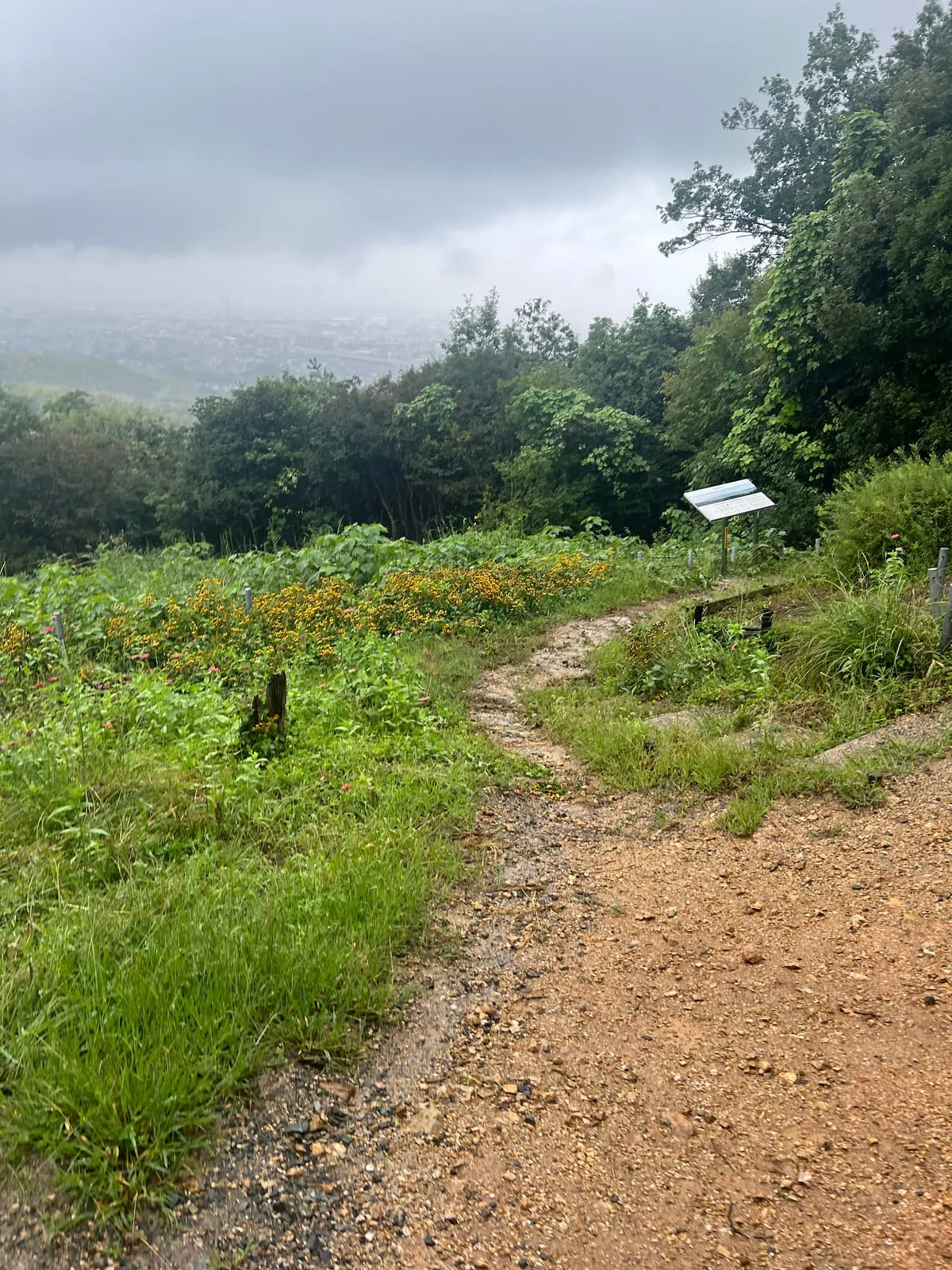
The rest was a road walk to Fushimi-Momoyama Castle — beautiful and striking, a fitting finale. From there it was another 30 to 40 minutes by road to Keihan Fushimi-Momoyama Station, where my three days of walking came to an end.
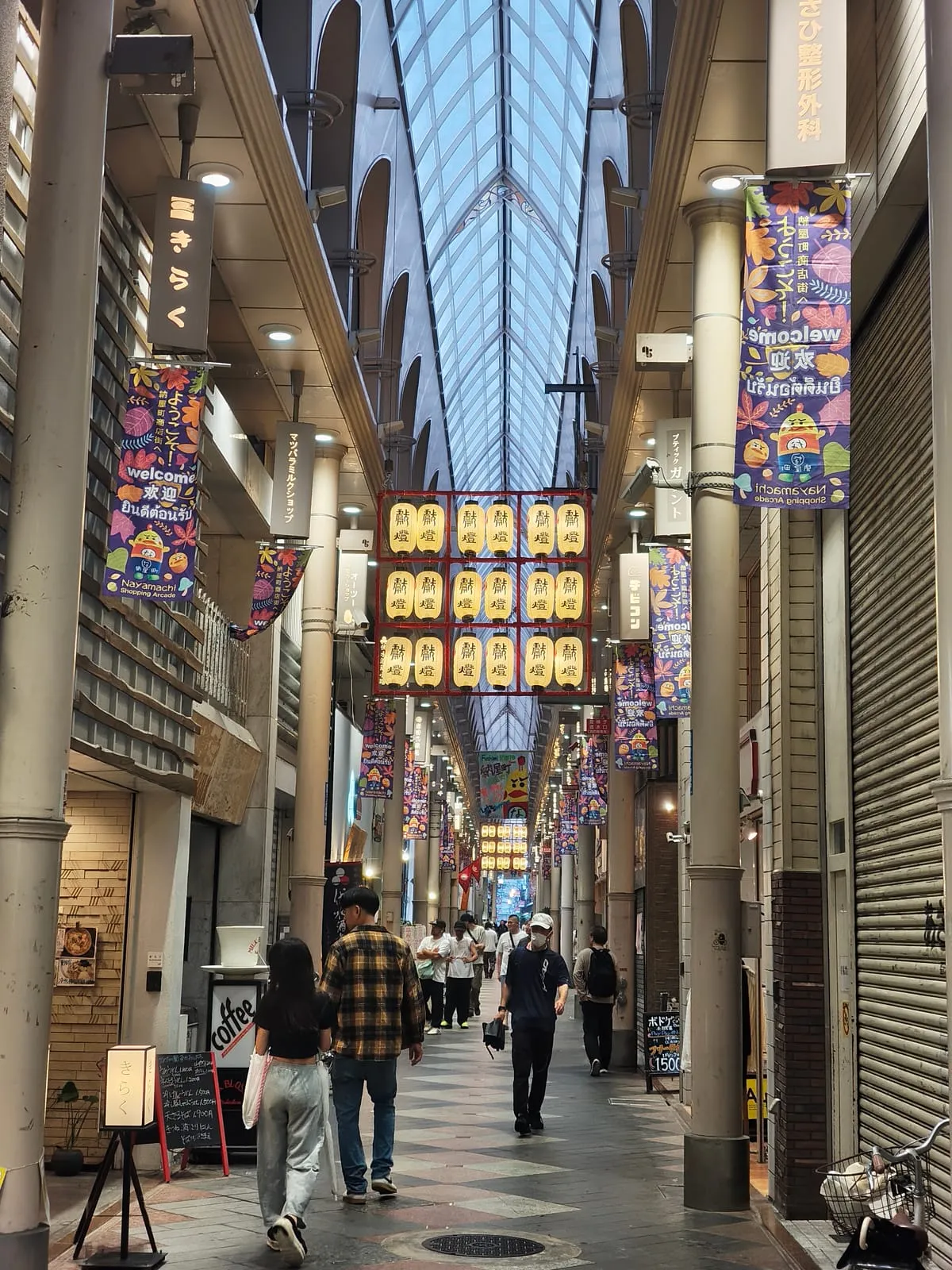
Fushimi after the finish
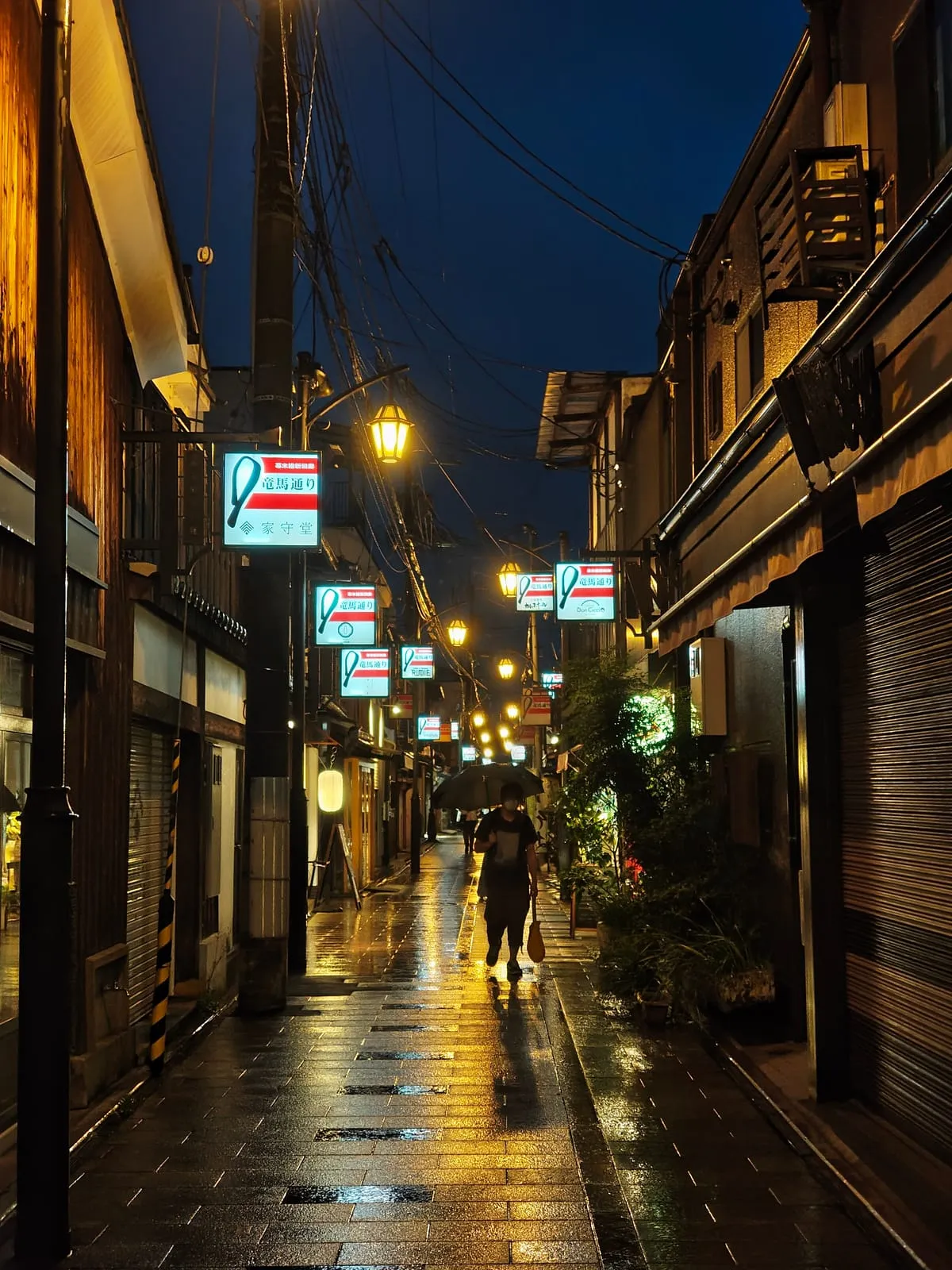
Fushimi turned out to be a wonderful town to finish in. In the evening, a covered shopping arcade runs around the station, so you don’t even need an umbrella. The crowds were just right, without too many tourists. Local life carries on as it always has, with traditional shops, stylish shops and izakaya pubs all side by side. I couldn’t imagine a better place to enjoy the end of a long walk.
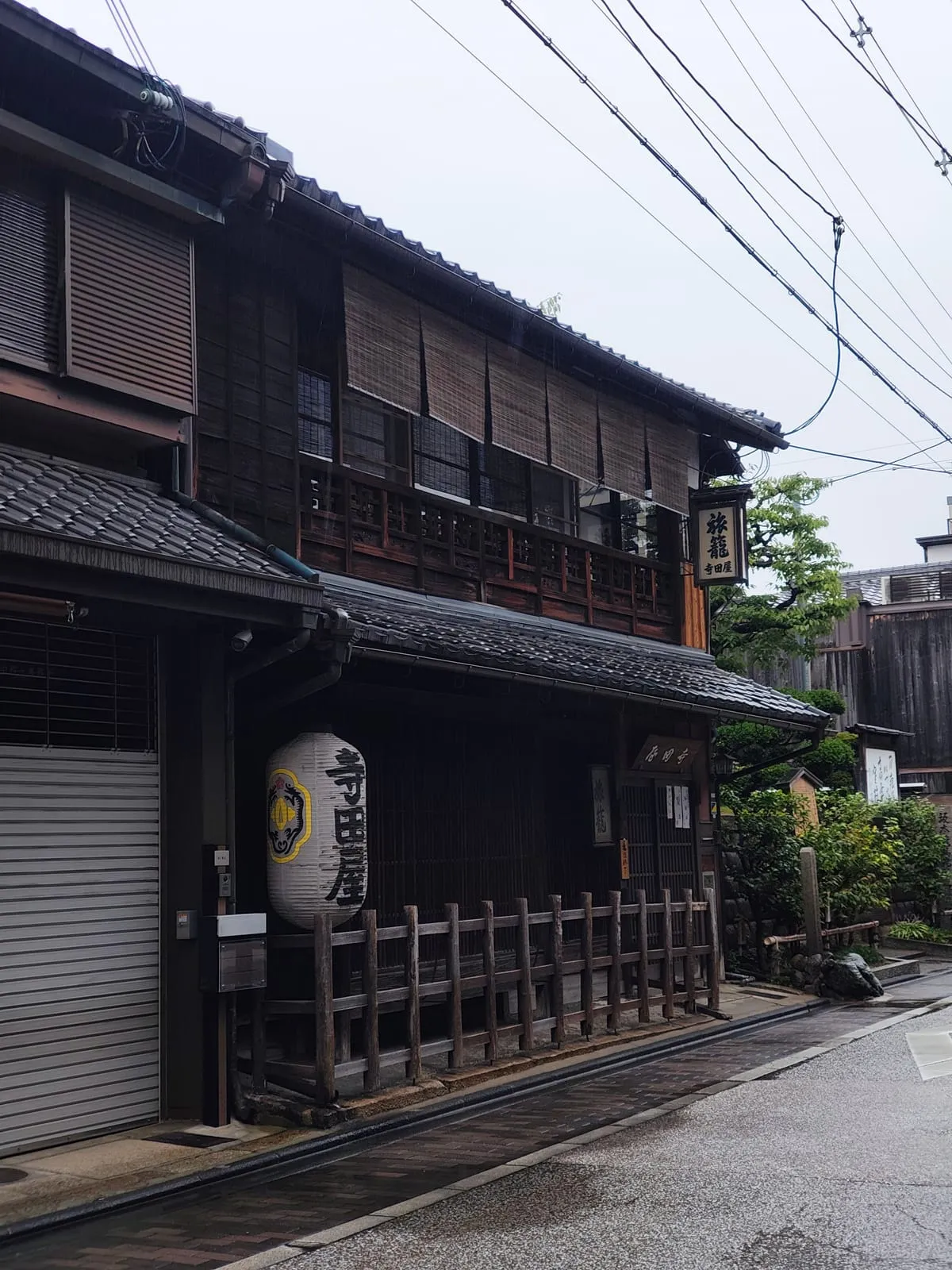
As a souvenir, I bought a black tenugui (a traditional cotton hand towel) at an old-fashioned shop selling fabrics and drawstring bags. The owner recommended I visit Terada-ya. I was on my way to a bathhouse in the other direction, and tired, so I hesitated — but on a journey, you should never forget your curiosity. I decided to go. Terada-ya is a former inn for river travellers where Sakamoto Ryōma, one of the best-known figures of the movement that ended Japan’s samurai government in the 1860s, often stayed. In 1866 he was attacked here by officials and narrowly escaped — an incident still famous in Japan. Beyond the arcade, an old townscape spreads out, where sake and craft beer are brewed. It was a truly Kyoto place, and going there was absolutely the right choice.
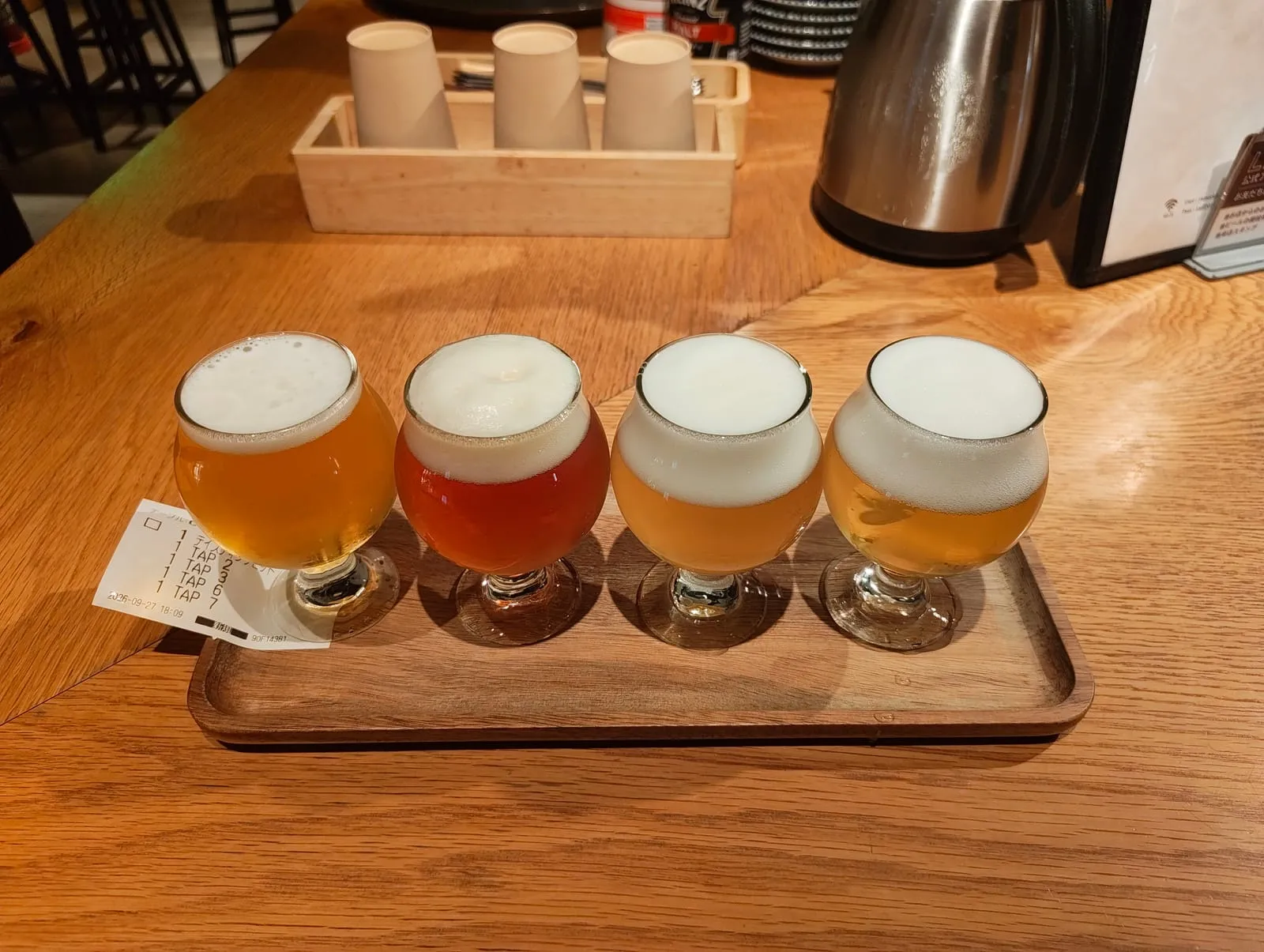
I washed off the sweat at a nearby bathhouse, and finished with a toast of craft beer. The next day I went sightseeing in Kyoto, and left on the morning of the 29th.
Why I recommend walking it in reverse
Fushimi, I think, is the best town there is for anyone who enjoys a drink. After a long walk, what a hiker wants at the end is good food, a hot bath and a drink. That’s why I think finishing at Fushimi-Momoyama — starting from Arashiyama, the reverse of the official direction — makes for a more satisfying trip than the official route from Fushimi-Momoyama to Arashiyama. Even with rain on the following days, I was glad to have walked beautiful stretches like the Kiyotaki river path on a clear first day.
For those who will walk it next
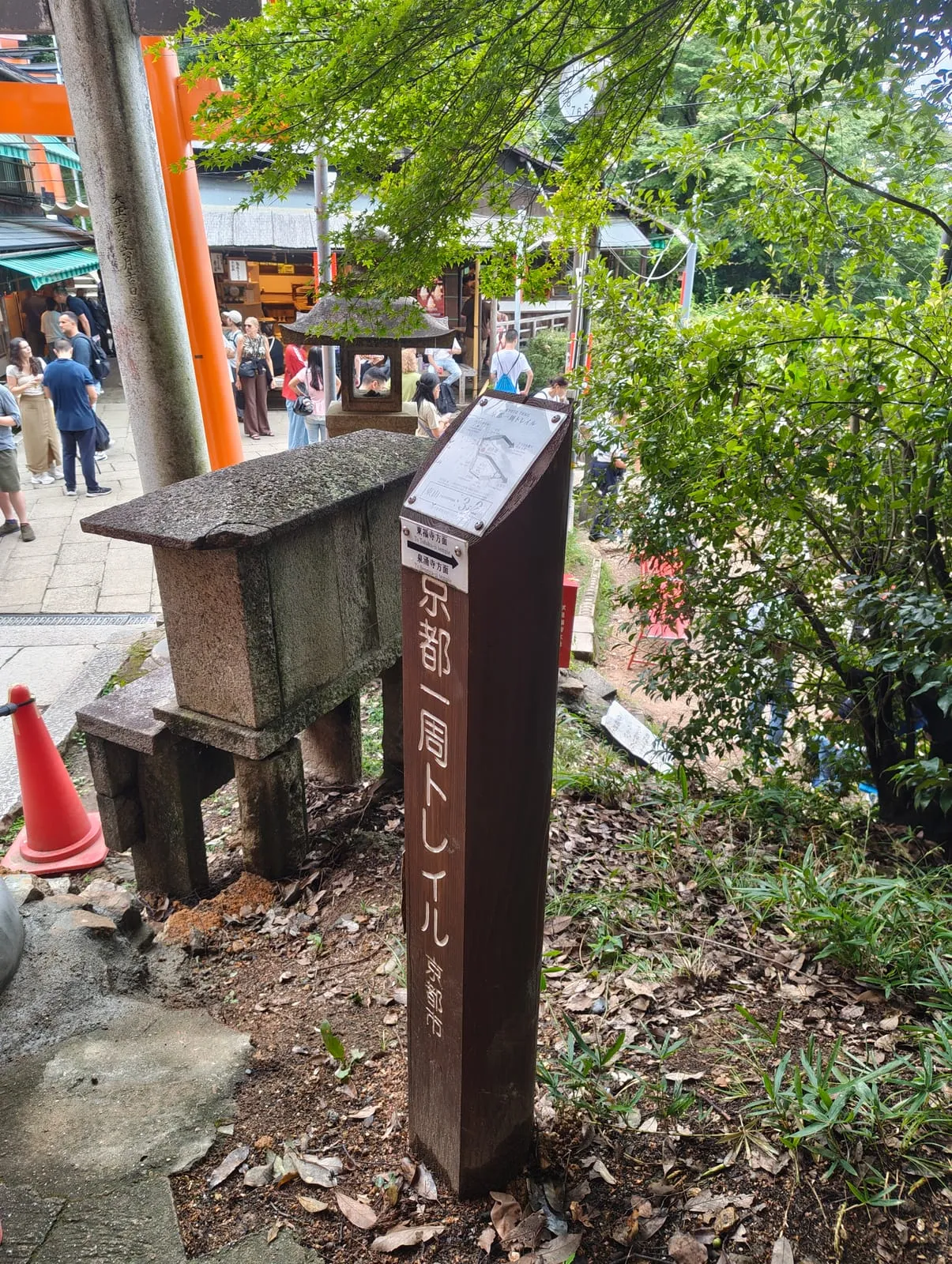
- Buy the official map. A map app alone left me unsure at many junctions.
- Bring plenty of food and salt. There are few places to eat in the mountains. Pack meals with different flavours, and get enough salt.
- Don’t skip lunch. Walking on without eating to cover more distance can wear you down until you’re unsteady on your feet.
- Check for bear sightings. Some areas have had recent sightings.
- Carry rain gear. On Mount Hiei and Mt. Ōiwa, the trails turn into streams in the rain. Take special care on descents.
- Decide where you’ll sleep in advance. There is almost nowhere to stay in the mountains or around the small stations.
- Plan for what comes after the finish. Fushimi’s bathhouses, sake breweries and craft beer — the time after the walk is part of the journey too.
Places I stopped at
- Ohara Farmy
- Sato-no-Eki Ohara (里の駅大原)
- Daikokuyu (大黒湯), public bathhouse
- Grill Fukuya (グリル富久屋) (Miyagawasuji 5-chōme 341, Higashiyama-ku, Kyoto)
- Terada-ya (寺田屋)