The "Mount Hiei of the West": What the Priest of Kozan-ji Temple Told Me, Kunisaki
Kozan-ji, a mountain temple linking sections T-1 and T-2 of the Kunisaki Peninsula Minemichi Long Trail. What its priest shared with a passing hiker: a temple built to guard Kyushu, a 20-day pilgrimage route, and a photographer who entered the priesthood.
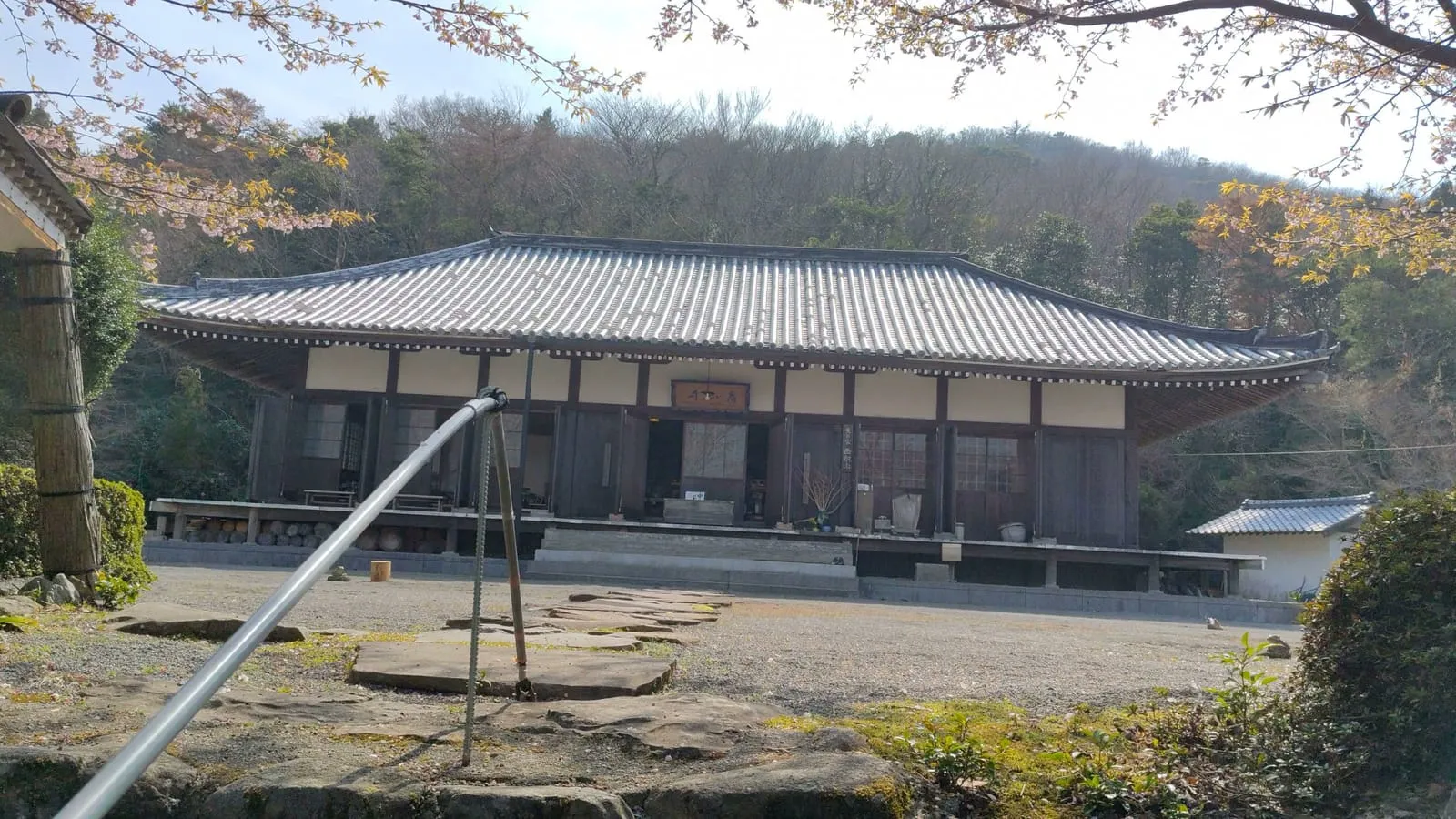
On the first day of my walk on the Kunisaki Peninsula Minemichi Long Trail, after crossing the rice fields of Tashibu no Sho and climbing again, I reached Kozan-ji Temple. It marks the end of section T-1 and the start of T-2. The resident priest here was the first person I spoke with that day. They kindly gave me about 30 minutes of their time and told me about the temple’s history and the trail itself.
What follows is what the priest shared with me, in my own words. Where the priest’s explanations draw on Buddhist beliefs and local tradition, I have tried to pass them on as they were told to me, with a little background for readers who are new to Japan.
At a glance
| Location | Bungotakada City, Oita Prefecture |
| Mountain name | Saieizan (西叡山) — see below |
| On the trail | End of T-1 / start of T-2 (about 11.5 km from the start at Kumano Magaibutsu, approx. 450 m above sea level) |
| Facilities | Car park, toilet |
| Japanese name | 高山寺(こうさんじ) |
The “Mount Hiei of the West”
Japanese Buddhist temples traditionally carry a “mountain name” (sangō) as well as a temple name. Kozan-ji’s is Saieizan, which means “Western Mount Hiei.”
Mount Hiei, on the edge of Kyoto, is home to Enryaku-ji, the head temple of the Tendai school of Buddhism and one of the most important religious sites in Japanese history. According to the priest, Kozan-ji was known as the “Mount Hiei of the West,” and was counted, together with Mount Hiei itself and Tōeizan Kan’ei-ji in Ueno, Tokyo (the “Eastern Mount Hiei”), as one of three great “Hiei” mountains. (I walked over Mount Hiei itself in rain and fog on the Kyoto Trail — see “The Kyoto Trail, Walked in Reverse.”)
Kozan-ji has deep ties to Usa Jingu, the great shrine just west of the peninsula, and was one of the temples of Rokugo Manzan — the network of temples across the Kunisaki Peninsula where Buddhism and the local worship of Shinto deities grew together as one faith. At one time, 45 halls stood on this mountain. About 450 years ago, every one of them burned down. For centuries the temple was not rebuilt, and people came to call it a “phantom temple” and a “mystery mountain.” It was only revived in the Shōwa era, in the 20th century.
Why the temple faces northeast
One thing the priest told me has stayed with me. Kozan-ji’s buildings face northeast — just like the Konponchūdō, the main hall of Enryaku-ji on Mount Hiei.
In traditional Japanese belief, the northeast is the kimon, or “demon gate”: the direction from which evil spirits were thought to enter. Mount Hiei stands to the northeast of the old imperial palace in Kyoto, and Kan’ei-ji to the northeast of Edo Castle in Tokyo. Both temples, in this way of thinking, were placed to guard their capitals against harm. According to the priest, Kozan-ji was built here on the Kunisaki Peninsula to do the same for the whole of Kyushu.
Kozan-ji is a temple for ascetic practice, not for funerals or family memorial services, as many Japanese temples are. Its prayers are for the peace of the nation as a whole.
A pilgrimage once 20 days long
The long trail we walk today traces the route of mine-iri — literally “entering the peaks” — a mountain pilgrimage practised by monks and associated with Ninmon Bosatsu, the legendary founder of Rokugo Manzan. The priest explained that the original mine-iri takes around 20 days, with prayers at more than 180 sacred places along the way. The modern trail is a version of that path adapted for today’s walkers.
The priest also asked something of those who walk it. This was, and still is, a path of religious practice, and walkers pass through places of prayer as guests. Please take your rubbish home, keep your voice down, and walk with care.
A mountain left untouched
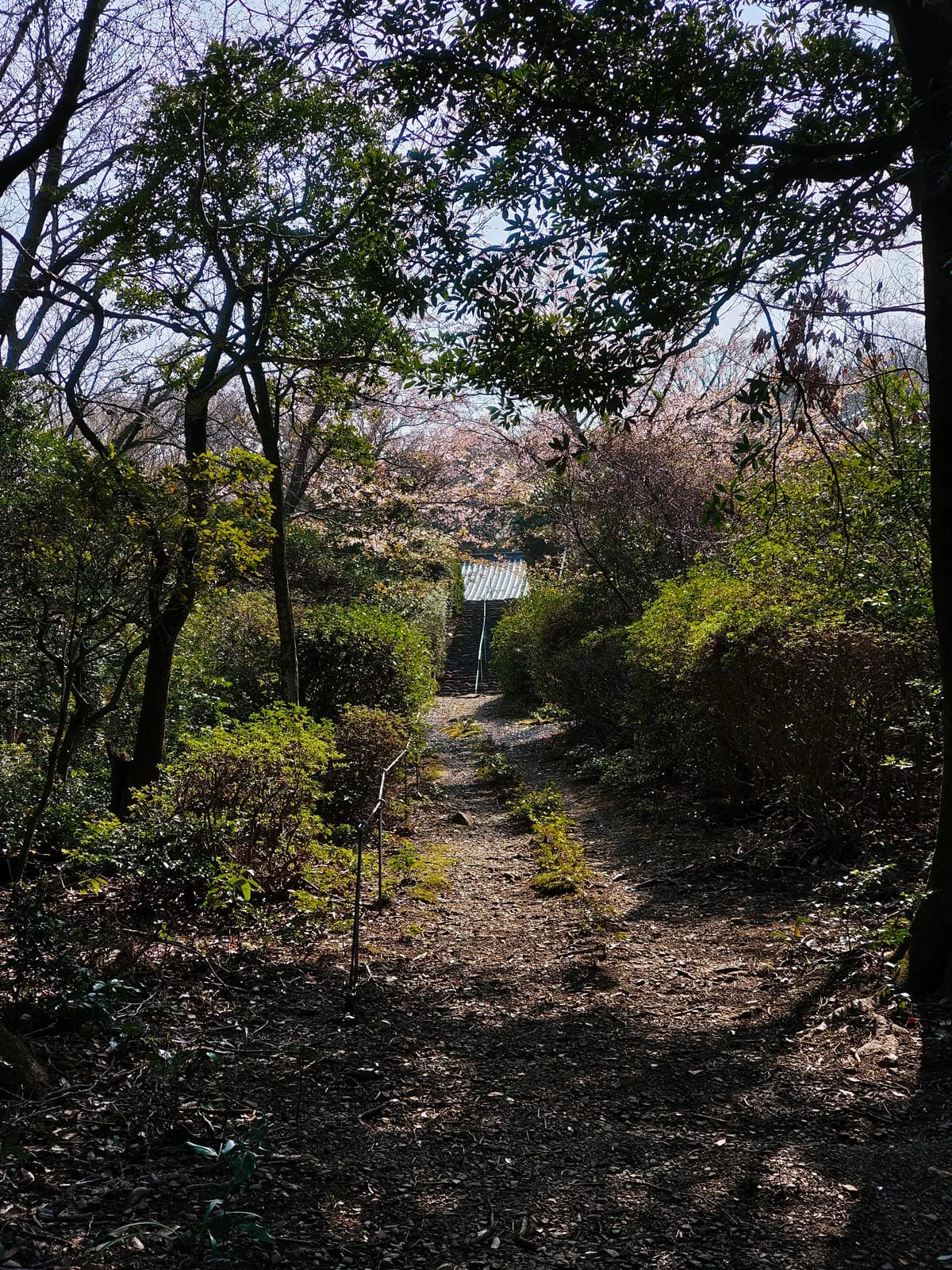
The priest believes the mountain still holds a strong, good energy — what in Japanese is called ki. After the fire, people barely touched the mountain for hundreds of years, and so, in the priest’s view, it has kept the natural power of a sacred mountain just as it was.
From photographer to monk
What surprised me most was the priest’s own story. Before entering the priesthood, they were a professional commercial photographer.
In the days of film, the priest told me, the final call on a photograph was the photographer’s. The responsibility was heavy, but so was the satisfaction. With digital photography, everyone began gathering around a computer screen to give their opinions; unwanted details were simply erased afterwards, and the photographer’s individuality seemed to disappear from the work. It was then that a monk they knew said that their temple had been “doing the same thing for 1,200 years.” Drawn to that, the priest left photography and entered the priesthood.
Convenience, and a happy life
Now 72, the priest also had a message for my generation. People have pursued science and learning to make life more convenient, the priest said, but more convenience has not necessarily made us happier. People lived well enough in the days before plastic. As machines take over the work that once used our bodies, the priest worries that we humans are, if anything, growing weaker. The priest hopes the next generation will build a world where people can live happy lives.
The priest’s view that walking itself matters stayed with me — especially after days of walking on my own two feet.
If you visit
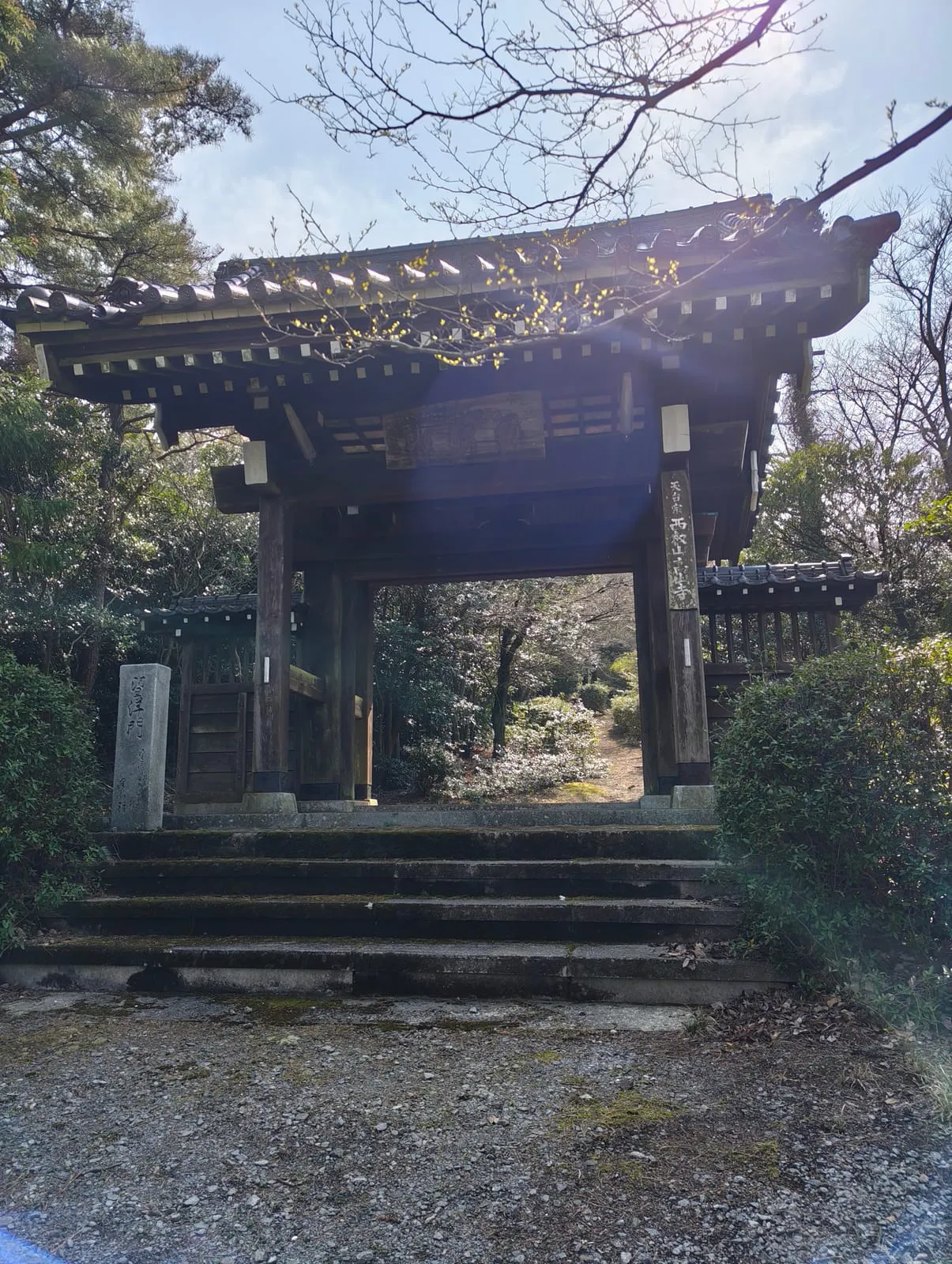
Kozan-ji is not a tourist site. It is a place where prayer and practice continue today, and there may be no English signs or English-speaking staff. If you visit, please do so quietly and respectfully: bow at the gate, keep your voice low, ask before photographing people, and treat the grounds as you would any place of worship.