〜
Walking Kunisaki: Four Days, and a Trail I Didn't Finish
A four-day attempt at the Kunisaki Peninsula Long Trail — temples, rockfaces, strangers' kindness, and an honest account of not finishing.
I walked four days of the Kunisaki Peninsula Long Trail this past March. I’ll say this upfront: I didn’t finish it. I still think it’s worth writing about — and by the end, I hope you’ll understand why.
Day One: A Temple on the Mountain, and a Strange Gift
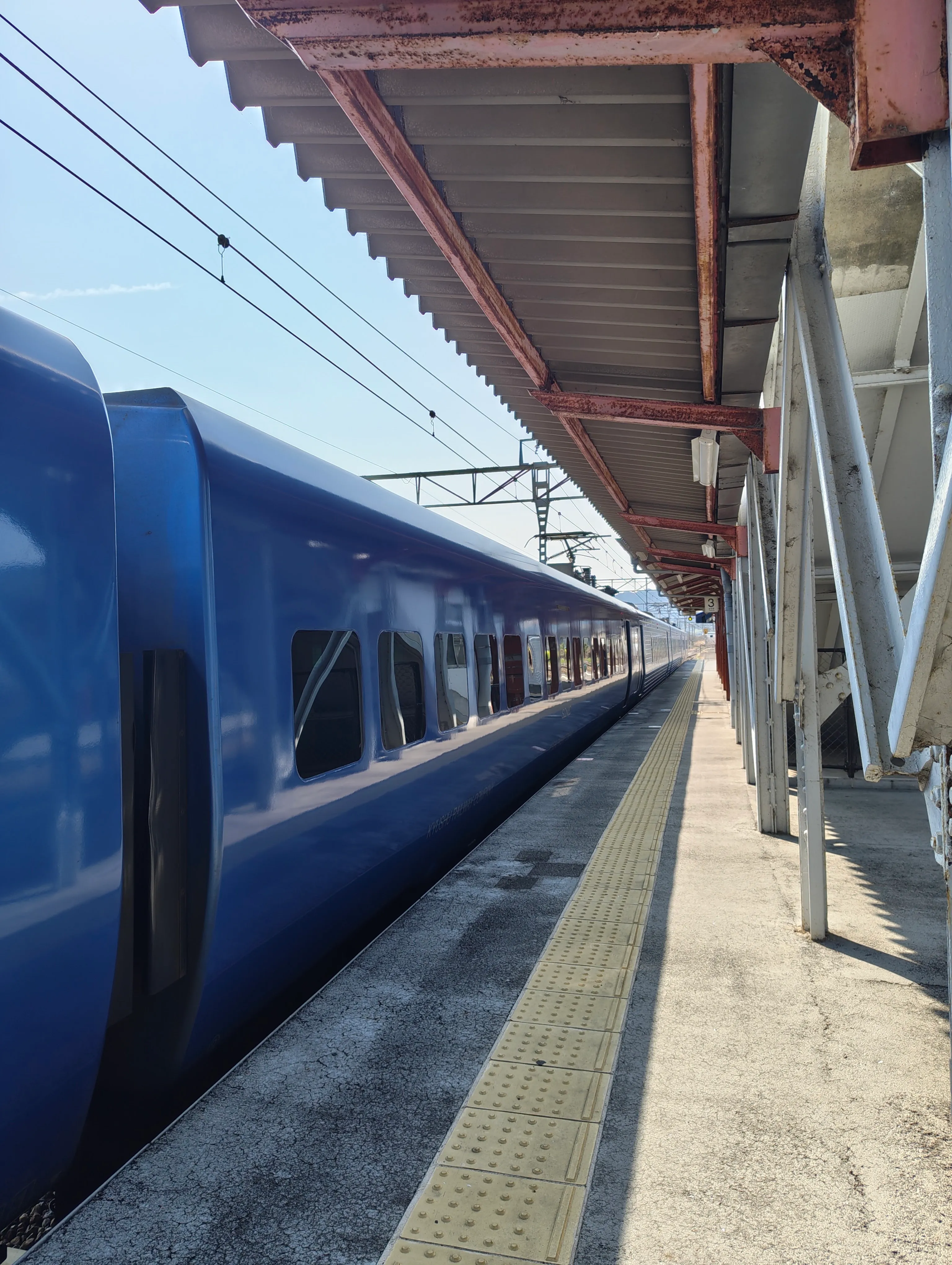
The trip started badly. I’d wanted an early start, but travel delays meant I didn’t reach the trailhead until noon — already too late to reach my target for the day.
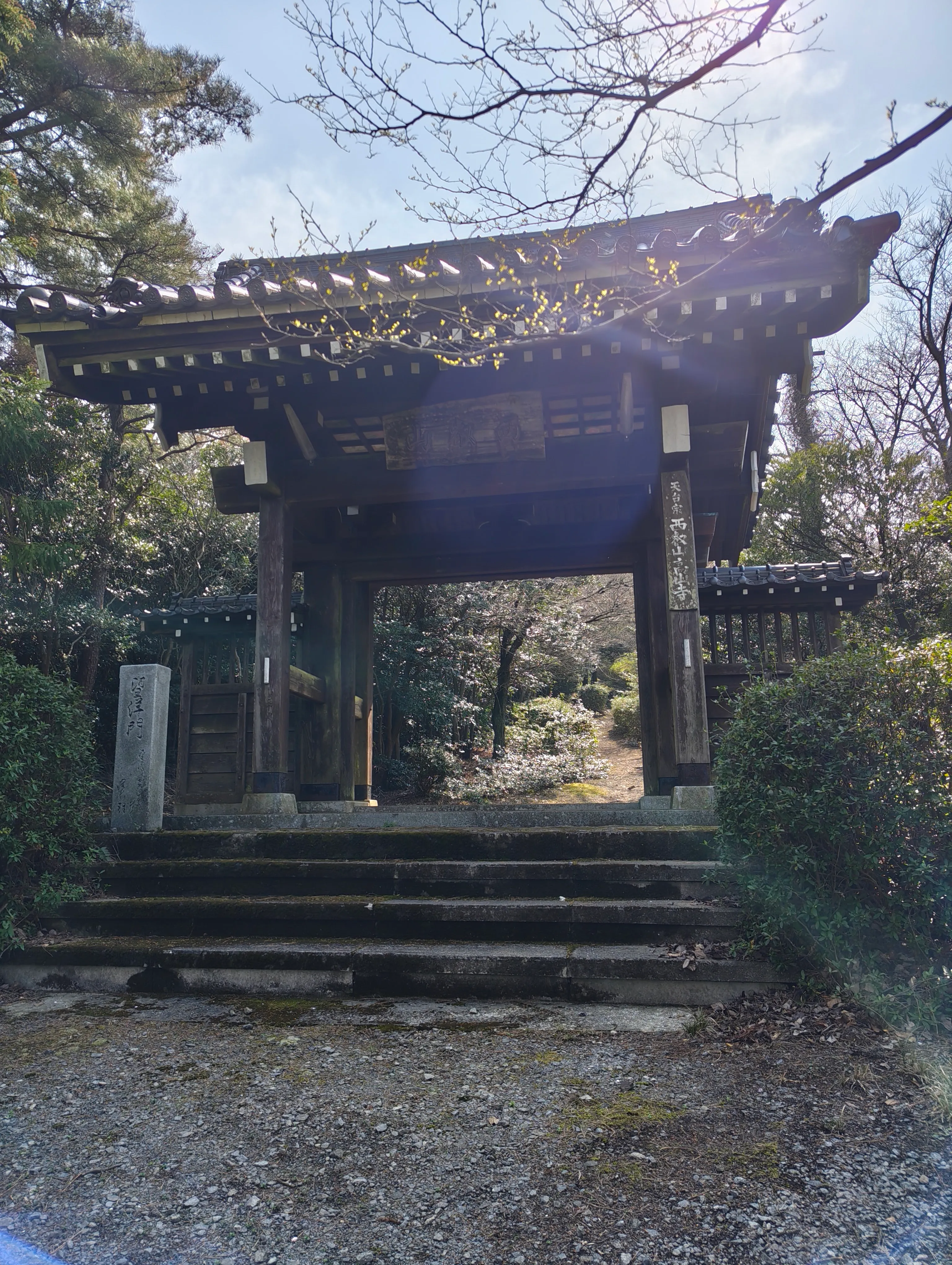
Partway through, I stopped at Kozan-ji, a small temple perched at the top of a paved road that otherwise led nowhere. There was nothing else up there — no houses, no people, nothing. I peered into the quiet temple grounds and found the resident priest, who took some time to talk with me.
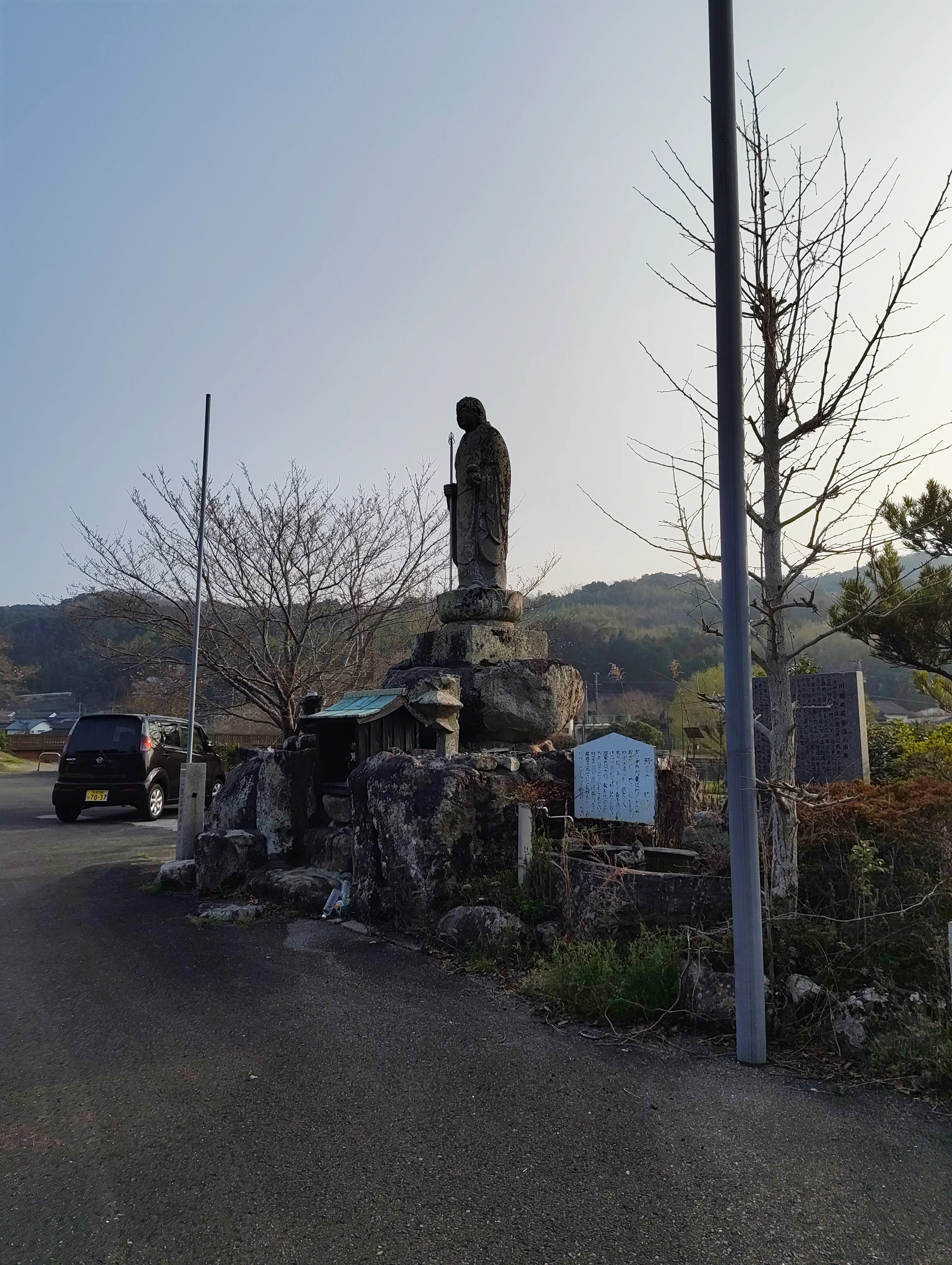
I never made it to my planned stop that night, so I pitched my tent in the parking lot of another temple instead. That’s where something strange happened. A cat living semi-wild on the temple grounds took an immediate liking to me, circling the tent while I set up and refusing to leave once I settled in. I could barely sleep. Then, sometime around midnight or 2am, it suddenly started crying outside. I looked out to find a dead mouse laid in front of the tent — a gift, maybe, though I still don’t know if I was being welcomed or warned off. I talked with a local resident nearby for a while afterward. That was day one.
Day Two: Rock, and a Long Wait in an Empty Parking Lot
Day two brought my first real rock scrambling on the trail — genuinely frightening. It also brought an onsen, which helped.
I reached that night’s stop around 6pm, just before full dark: a parking lot before a trailhead, with nothing resembling a campsite — no lights, no neighbors, just a manual pit toilet in the middle of the mountains. Deer started calling somewhere in the dark, which didn’t help.
One car sat alone in the lot. No one around. I remember thinking, half-joking and half-serious, whoever’s out there has been gone a long time — did something happen to them? I searched the area and found no one. I gave up and started eating dinner in my tent when two hikers finally returned to the car. They turned out to be perfectly ordinary people. When I mentioned I was low on food, they handed over some sweets and bread without hesitation. Aside from the deer, I slept well that night.
Day Three: “Why Am I Doing This?”
Day three opened with a brutal elevation gain — up and down a 300-to-400-meter peak before dropping further into Nakayama Senkyo, a section I’d heard was difficult. My legs were already heavy by the time I got there.
Nakayama Senkyo isn’t really a rock scramble — it’s a ridge walk along the edge of a cliff, no railing, where one wrong step means a fall with no second chance. I was carrying more than 10 kilograms of gear through it.
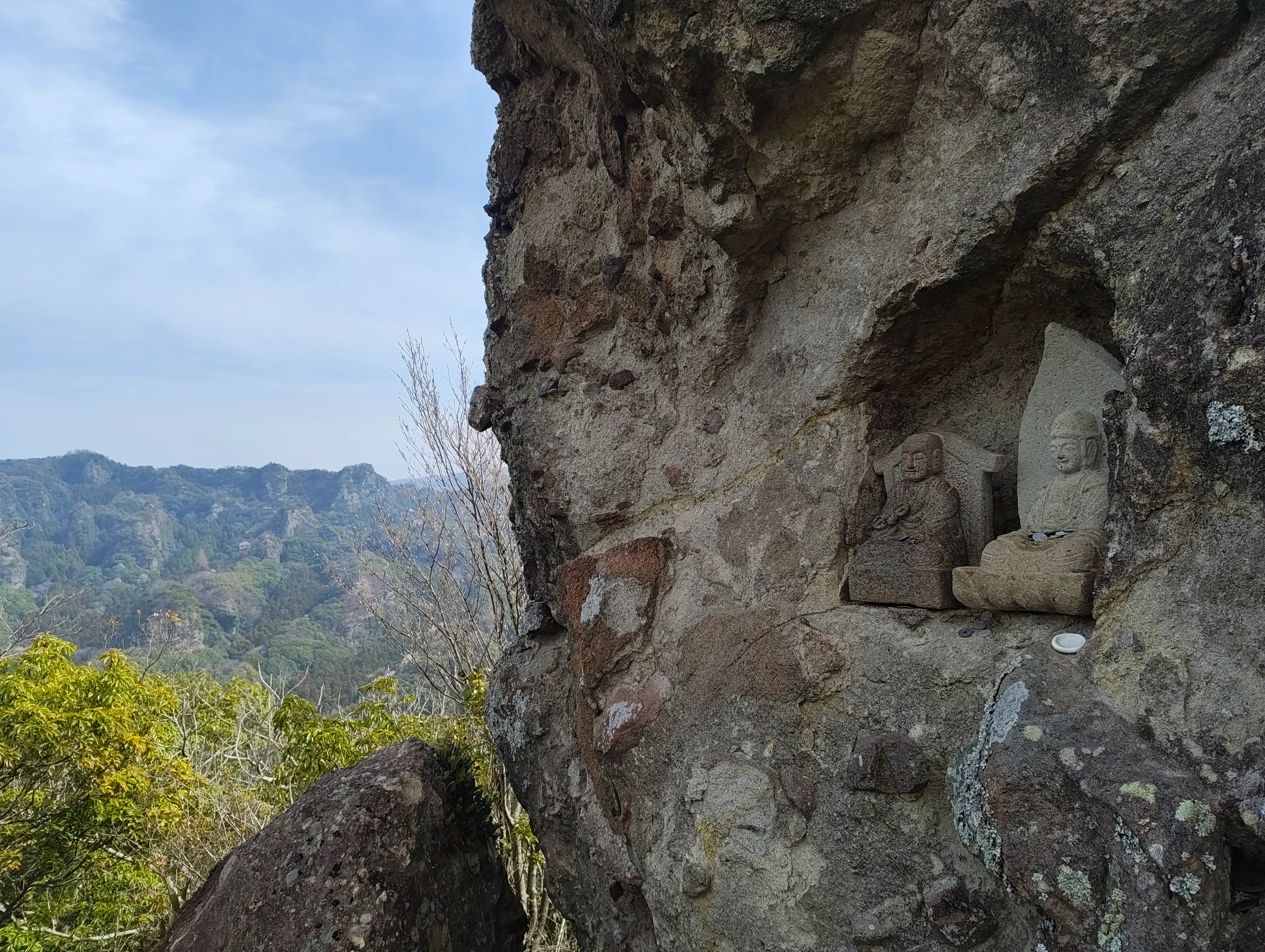
I don’t often carry that much weight, and I don’t hike often enough to be used to any of this — the chains, the exposure, the height. All of it compounded into something that wore down my nerves faster than my legs. I was walking alone, with no one to talk to, entirely focused on the next handhold. At some point I said out loud, to no one, “Why am I doing this?”
I finished the descent around noon — hungry, with more climbing ahead that afternoon and no time to spare. My food was nearly gone, I needed water, and there wasn’t a vending machine in sight. I sat down on the roadside and, honestly, thought about quitting right there.
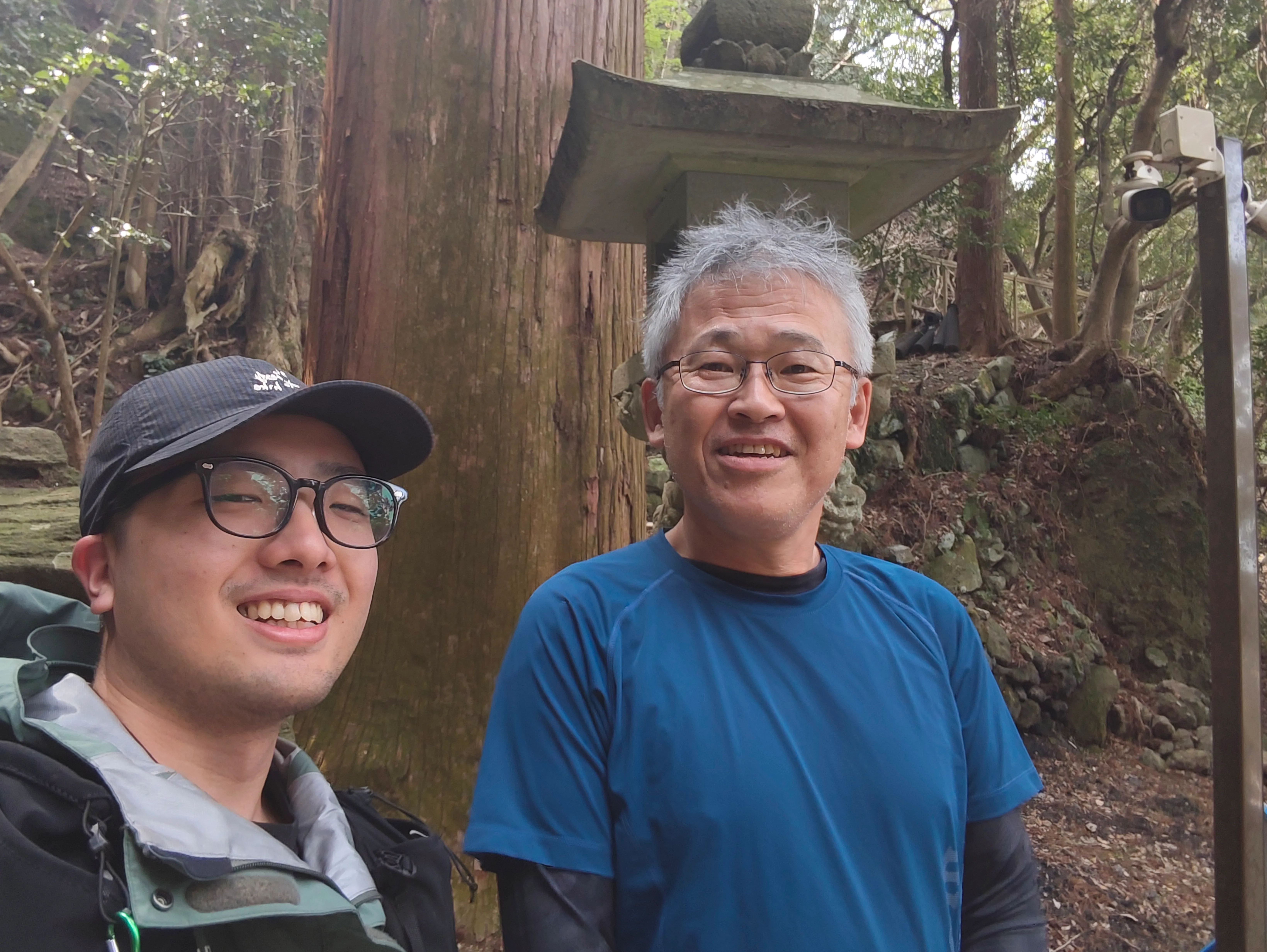
Then I spotted one vending machine in the distance. I walked to it and found a parking area with a local hiker nearby. I explained my situation, and he offered to drive me into town — stopping along the way at a roadside market for a meal that might be the best thing I ate on the entire trip. He then drove me on to Monju Sen-ji, a temple built into the cliffs, one of those places in Kyushu you can really only reach by car. It skipped a stretch of trail, but the conversation in the car was its own kind of gift.
Day Four: A Beer That Wasn’t Quite Perfect
I wasn’t feeling great on day four, and I have to admit why. I’d had a bad cold and severe hay fever through February and March, and my immune system was clearly still recovering. Even with pollen season winding down, being in the mountains kept irritating my sinuses, and I spent most nights blowing my nose. My body hadn’t fully bounced back, and I could tell something was off.
With rain forecast for the afternoon, I decided to keep the day short — about 10 kilometers — and stay at a small guesthouse I’d spotted along the route.
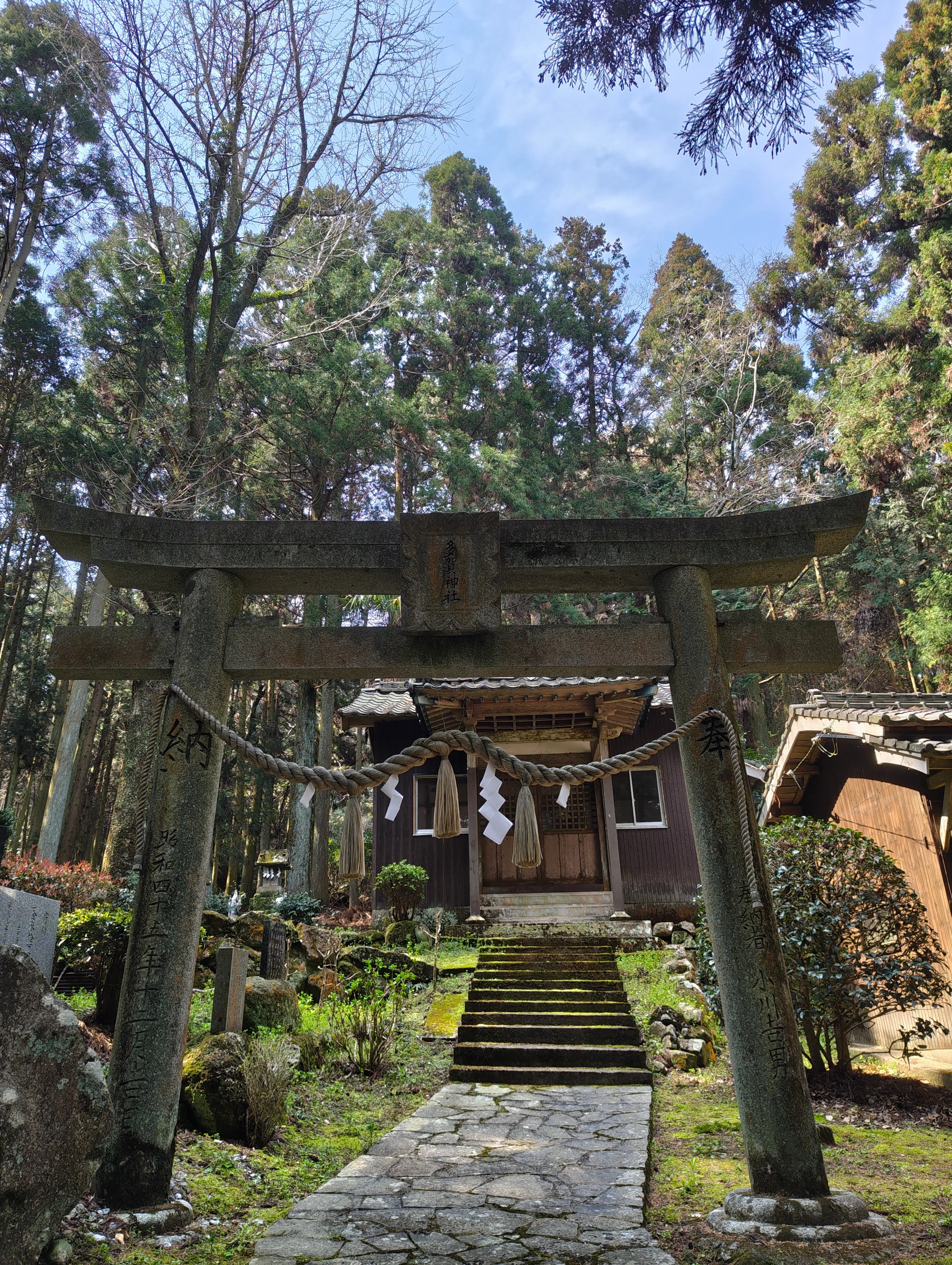
Near the end of that stretch, I came down into a small town and found a grassy park full of elderly residents — some walking laps, others gathered for lunch. Time seemed to move slowly there. My guesthouse was just up the road, so I decided to call it a day early and opened a beer right there in the park.
I’d been imagining that beer as the best one I’d ever have. It wasn’t, not quite. I still hadn’t reached my goal, and my body was maybe 60% of what it should have been — and somehow that showed up in the taste. Looking back, it wasn’t the perfect beer I’d pictured.
The guesthouse itself was one of the most peaceful places I stayed on the whole trip. Talking with the owner, I learned a lot about the real challenges facing this region, and shared some of what I’d learned researching the trail myself. It was a genuine exchange, and it gave me a clearer picture of what this place is actually up against.
Why I Didn’t Finish
I ended my trip there, for two reasons.
The first was physical — I could feel my cold threatening to come back, and my body hadn’t recovered enough to push further safely. The second was more structural. My final destination, Futago-ji temple, was still 20 to 30 kilometers away. But Kunisaki’s population has declined sharply, and public transport here is even sparser than in other rural areas I’ve hiked, including the Kumano Kodo. Some routes only run a bus once a week. Futago-ji itself sits near the center of the peninsula, far from any real town — meaning that even if I’d reached it on foot, there was no realistic way to get back out.
Between the two, I made the call. The next day, I got a ride to Oita Airport and ended the trail there.
Why It Was Still Worth It
That last morning at the guesthouse was the kind of peaceful I could have sat in for hours. Which is exactly why it struck me how fragile it all is — an aging population, no one to take over the farms, a landscape that could quietly disappear within a generation if nothing changes.
From Oita Airport, I made my way to Beppu, one of Japan’s great onsen towns — proof that once you’re out of the mountains, this region opens up fast, with hot springs close enough to soothe a body still recovering from the trail.
I didn’t reach the end. But the two hikers who fed me in a dark parking lot, the old folks in that quiet park, the guesthouse owner who told me the truth about this place — none of that shows up on a map or in a guidebook. Four days in, I was reminded that reaching the destination was never really the point.