〜
The Kunisaki Peninsula: Japan's Other Ancient Pilgrimage Trail
Shinto-Buddhist fusion, a 1,300-year-old mountain practice, and how it differs from the Kumano Kodo — the historical significance of the Kunisaki Peninsula Long Trail.
Most seasoned travelers to Japan have heard of the Kumano Kodo, the UNESCO-listed pilgrimage trail in the Kii Peninsula. Far fewer have heard of a trail with older roots, tucked into the Kunisaki Peninsula on the northeastern coast of Kyushu — and even most Japanese people barely know it exists.
It’s called the Kunisaki Peninsula Minemichi Long Trail: roughly 123 to 135 kilometers, split across ten sections, built on the training routes of Rokugo Manzan, a religious culture that has continued here for over a thousand years. The modern trail was opened in 2013, not by a government agency, but by a local volunteer group — the Kunisaki Peninsula Minemichi Trail Club — made up of residents who loved hiking and local history enough to map, clear, and maintain the routes themselves.
To understand what makes this trail different from any other in Japan, you have to understand Rokugo Manzan itself.
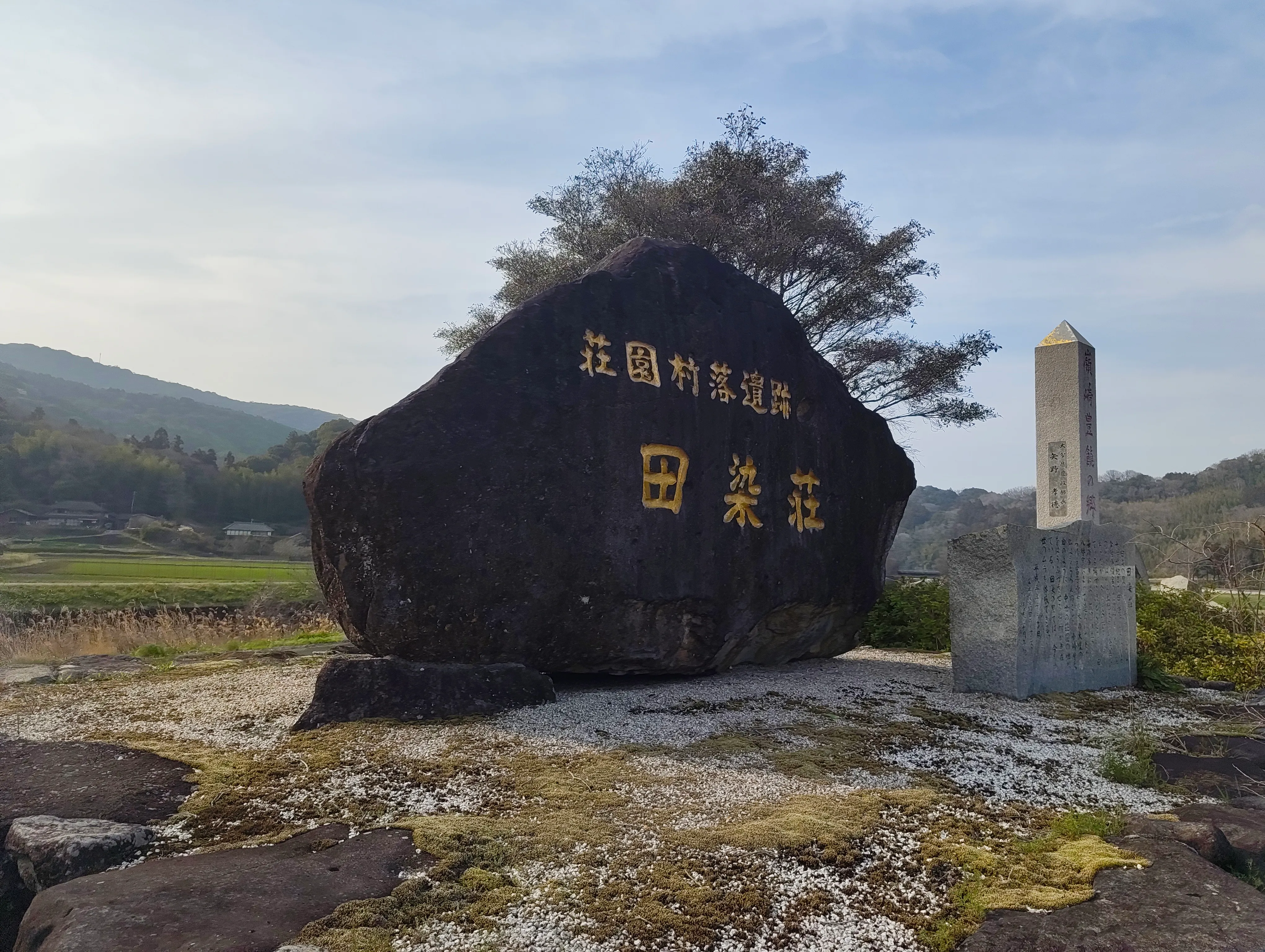
Rokugo Manzan: A Uniquely Japanese Fusion of Faiths
Rokugo Manzan refers to the network of Tendai Buddhist temples scattered across the Kunisaki Peninsula, and the mountain-worship culture that grew around them. At its core is shinbutsu-shugo — the fusion of Shinto and Buddhist belief into a single, unified practice, rather than two traditions kept apart.
In most Buddhist countries, indigenous belief systems and imported religion tend to stay clearly distinct. In Japan, they simply merged, without conflict. The same person visits a Shinto shrine on New Year’s Day and holds a Buddhist memorial service for their ancestors in August — a contradiction most Japanese people never think twice about. Kunisaki is where the oldest, least diluted form of that fusion still survives.
Mine-iri: A 1,300-Year-Old Practice That Still Continues
The origins of Rokugo Manzan trace back to 718 CE, when Ninmon Bosatsu — believed to be an incarnation of the deity enshrined at Usa Jingu, one of Japan’s most important shrines — is said to have founded 28 temples across the peninsula, merging older mountain-worship traditions with Buddhism.
The pilgrimage route itself took its current shape in 855 CE, according to tradition, when Ninmon Bosatsu appeared before the monk Noh-gyo and revealed two mountain routes to be walked. By the Edo period, this had become a formalized, collective ritual practice.
What makes this trail extraordinary is that the practice never stopped. Roughly once a decade, it still happens. In the most recently documented instance — six days in March and April of 2010 — around 30 Tendai monks and more than 100 lay practitioners walked 150 kilometers through the peninsula’s steepest terrain, beginning with a fire ritual at a cliff-carved Buddha, passing through rites that include throwing sacred leaves from cliff edges and leaping between rock outcrops, visiting over 180 sacred sites, and concluding with a closing ceremony at Futago-ji temple. This isn’t a preserved relic. It’s a living practice, still carried out by monks today.
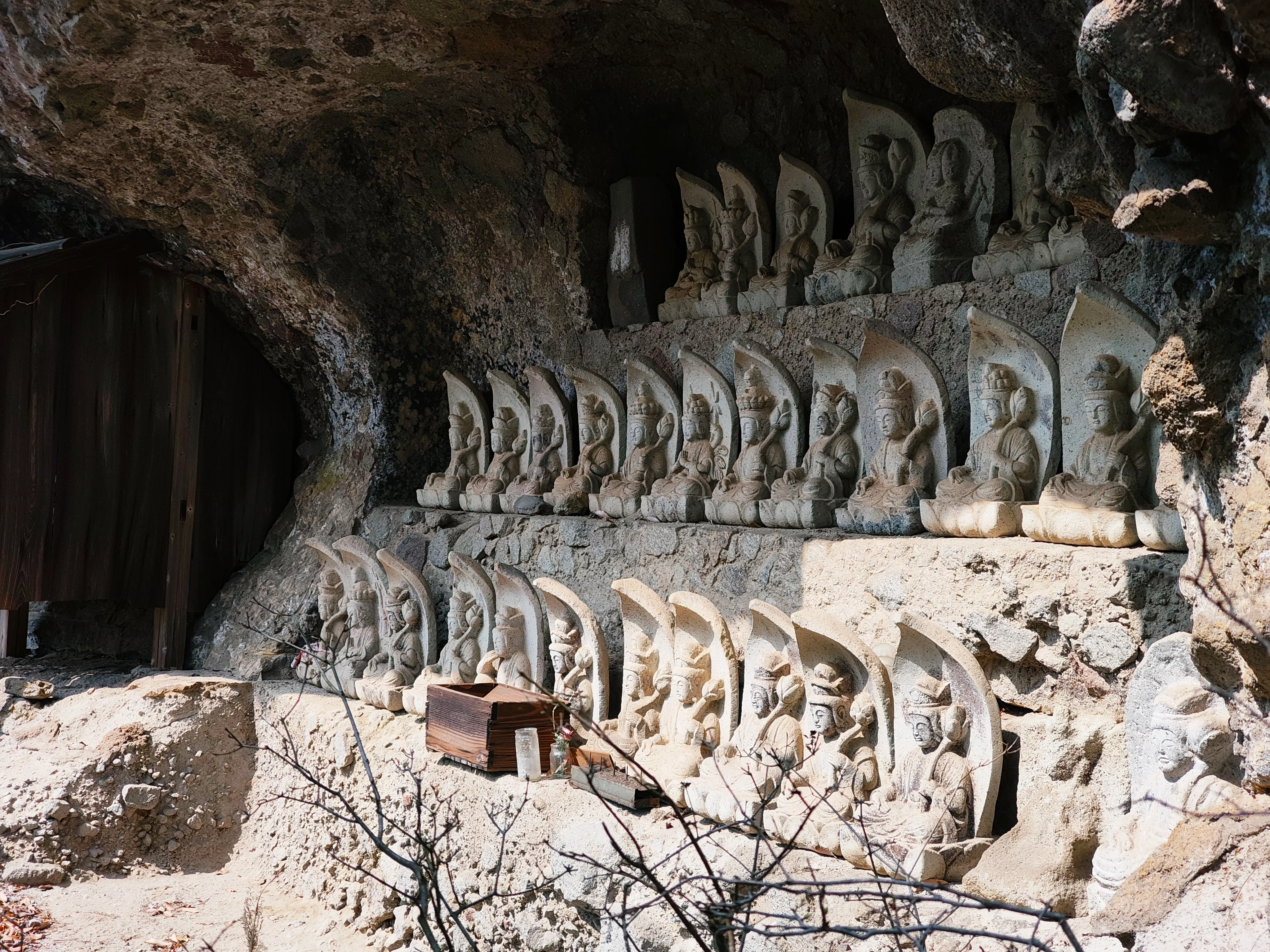
Buddhas Carved Into Stone
Walk the trail and Buddhist statues appear constantly — at road bends, in quiet forests, carved directly into exposed rock faces. The peninsula’s volcanic geology exposes large sheets of tuff breccia, and for centuries, ascetics carved Buddhas straight into these cliffs as objects of devotion. Some faces are stern, others almost playful — a distinct visual language found almost nowhere else in Japan.
Shujo Onie: The Festival Where Demons Bring Blessings
Kunisaki is home to Shujo Onie, a fire ritual believed to be over 1,200 years old, blending a New Year prayer for good harvest with an ancient court ritual for driving away evil spirits.
What makes it unusual — and genuinely unlike most demon or ogre folklore in the West — is that the demons in this festival aren’t something to be exorcised. Through their interaction with gods, Buddhas, and villagers, they transform into bringers of good fortune. Even today, the demons strike worshippers’ shoulders with burning torches to ward off illness, then visit homes throughout the district to be welcomed and fed. It inverts a story most visitors think they already know.
A UNESCO-Recognized Agricultural Landscape
On May 30, 2013, the Kunisaki-Usa region was designated a Globally Important Agricultural Heritage System (GIAHS) — recognized for a traditional agricultural and fishery cycle connecting sawtooth oak forests, irrigation ponds, terraced rice paddies, and coastal fishing.
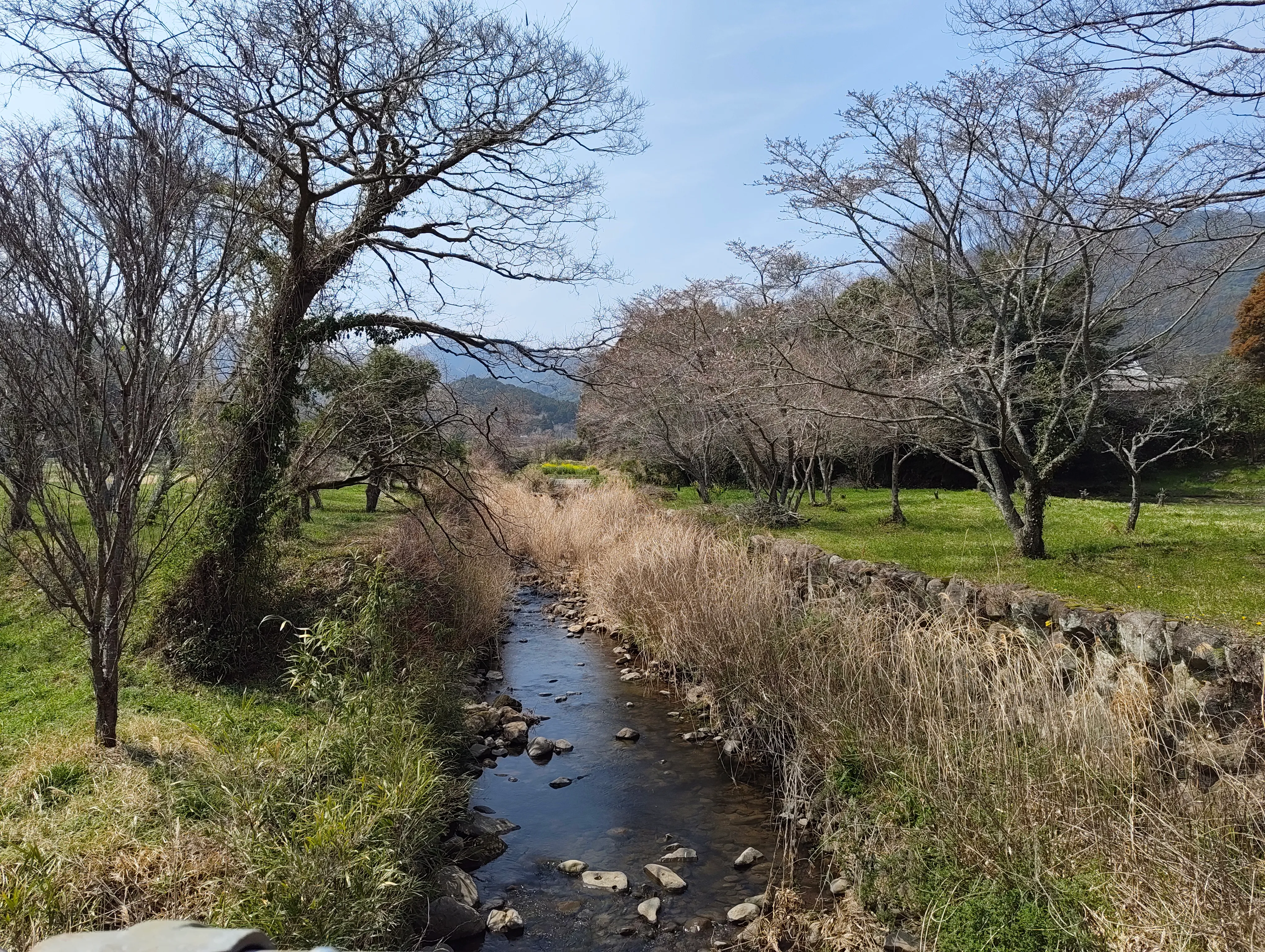
Walking this trail means encountering more than temples and rock-carved Buddhas. It means walking through a living landscape where faith and agriculture have never been separate — shiitake cultivation on oak logs, rice fields fed by centuries-old ponds, all shaped by the same religious tradition that built the trail itself.
How It Differs From the Kumano Kodo
Both the Kumano Kodo and the Kunisaki trail are sacred pilgrimage routes, but their character differs. The Kumano Kodo developed as a path of prayer and salvation — relatively gentle, walkable terrain built around the idea of spiritual redemption. The Kunisaki trail, by contrast, was born as an act of physical austerity: monks risking their lives on exposed ridgelines as a form of religious discipline. Rock scrambles and chain-assisted climbs are common, and the trail is considerably more demanding than the Kumano Kodo.
If the Kumano Kodo represents forgiveness and salvation, Kunisaki represents discipline and endurance. Neither is superior — together, they represent two distinct faces of Japan’s pilgrimage culture.
Officially Recognized as One of a Kind
On October 29, 2019, Japan’s Agency for Cultural Affairs added “The Path of Mine-iri, Rokugo Manzan” to its list of the “100 Selected Historic Roads” — a rare national designation. Four sections were selected for retaining their original, unpaved character, connecting Usa Jingu, Mount Omoto, and several of the peninsula’s oldest temples.
The criteria for a religious road to qualify are strict: it must be part of a belief system spanning a region on the scale of multiple countries. Across the whole of Kyushu, this is the only road that meets that bar. It isn’t simply a scenic local trail — it’s one the Japanese government has formally recognized as carrying a belief system with region-spanning historical reach, and Kunisaki holds the sole example on the island.
Why This Trail Is Worth Walking
The Kunisaki Peninsula Minemichi Long Trail isn’t valuable simply because it’s scenic or old. It condenses, into a single walkable route, the origin of Japan’s syncretic religious identity, a physical practice still carried out by monks today, a demon festival that inverts a story you think you know, and a landscape where faith and farming have never been separated.
For travelers who have already walked the Kumano Kodo, this is the trail that shows you another face of Japan — older, harder, and far less discovered. And because it remains largely undeveloped as a tourist destination, walking it now offers something increasingly rare: a pilgrimage that hasn’t yet been smoothed over for visitors.